Discover Cabeceiras de BastoFree independent guide
ViveCabeceirasYOUR GUIDE TO CABECEIRAS
ENEnglish
SearchSaved
4 STORIES · CONTINUOUS READING

From Arco to botany

Four moments in the life of Júlio Augusto Henriques, from his school days to the wood of a painting.

Follow the suggested order. Each story includes its sources and credits.

Things to try4 questions
Arco de Baúlhe

The botanist who started out in law
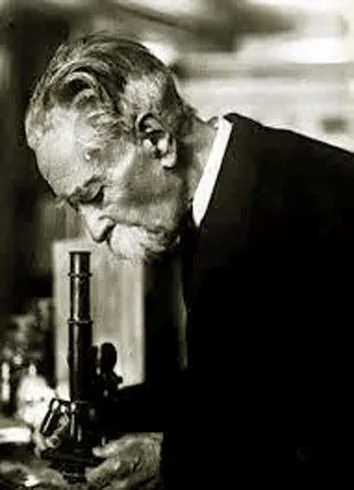
Archival portrait of the botanist in his workspace.
Júlio Augusto Henriques in his laboratory, in an archival photograph published in André Varela Remígio’s study.
ⓘ

Júlio Augusto Henriques in his laboratory, in an archival photograph published in André Varela Remígio’s study.

Source: CEPESE

View source

Photograph date not stated.

Fonte identificada. Autoria e licença de reutilização por identificar.

Request removal or correct the photo credit

Júlio Augusto Henriques left Arco de Baúlhe to study in Coimbra. His path to botany took two changes of course.

He was born in Arco in 1838 and went to school there before moving to Coimbra in 1854. He enrolled in law in 1855, graduated four years later and never practised as a lawyer.

In 1861 he enrolled in mathematics. Later that year he switched to philosophy, a course that included natural history. From then on, plants were to become his life’s work. Today his name on the Arco school library offers a local starting point for the story.

Getting to know the parish
Source and context

André Varela Remígio, estudo sobre Júlio Augusto Henriques, pp. 178–199

Municipality of Cabeceiras de Basto · Júlio Augusto Henriques

Accessed: . Editorial summary; the date of consultation is not the date of the facts.

Back to index ↑
Arco de Baúlhe

Leaves that travelled by post

A letter from 1895 shows how the Arco-born botanist gathered and exchanged plants for research.

In February 1895, Júlio Henriques wrote to Augusto Goltz de Carvalho to ask him to send plants for distribution through the Sociedade Broteriana. In the same message he said he would send him ferns soon. The University of Coimbra Archive records the card and its date.

Coimbra’s herbarium, which he founded in 1880, keeps specimens for study and comparison. Dried plants can preserve clues for decades, from the name they were given to the place and date of collection.

Getting to know the parish
Source and context

Arquivo da Universidade de Coimbra · Correspondência de Augusto Goltz de Carvalho, pp. 108–109

Herbário da Universidade de Coimbra

Accessed: . Editorial summary; the date of consultation is not the date of the facts.

Back to index ↑
Arco de Baúlhe

The tree behind the painting

Painting of Saint Peter on a throne, against an intricately detailed background.
The Saint Peter panel by Vasco Fernandes, reproduced in the study on Júlio Augusto Henriques’s analyses.
ⓘ

The Saint Peter panel by Vasco Fernandes, reproduced in the study on Júlio Augusto Henriques’s analyses.

Source: CEPESE

View source

Photograph date not stated.

Fonte identificada. Autoria e licença de reutilização por identificar.

Request removal or correct the photo credit

The botanist from Arco examined pieces of wood from old paintings. His question was simple. What sort of tree supplied the panel?

In the 1890s, Júlio Augusto Henriques examined wood from paintings in the Azores, Porto and Viseu. Among the works identified in André Varela Remígio’s study is Saint Peter, by Vasco Fernandes, the painter known as Grão Vasco.

Looking at the wood’s fibres and tissues helped compare each sample with known kinds of timber. For the Saint Andrew triptych from Ribeira Grande, Henriques recognised the structure of oak. A detail behind the painting brought the restorer’s work together with that of the botanist.

Getting to know the parish
Source and context

André Varela Remígio, estudo sobre Júlio Augusto Henriques, pp. 178–199

Accessed: . Editorial summary; the date of consultation is not the date of the facts.

Back to index ↑
Arco de Baúlhe

From Arco to Uppsala in 1907

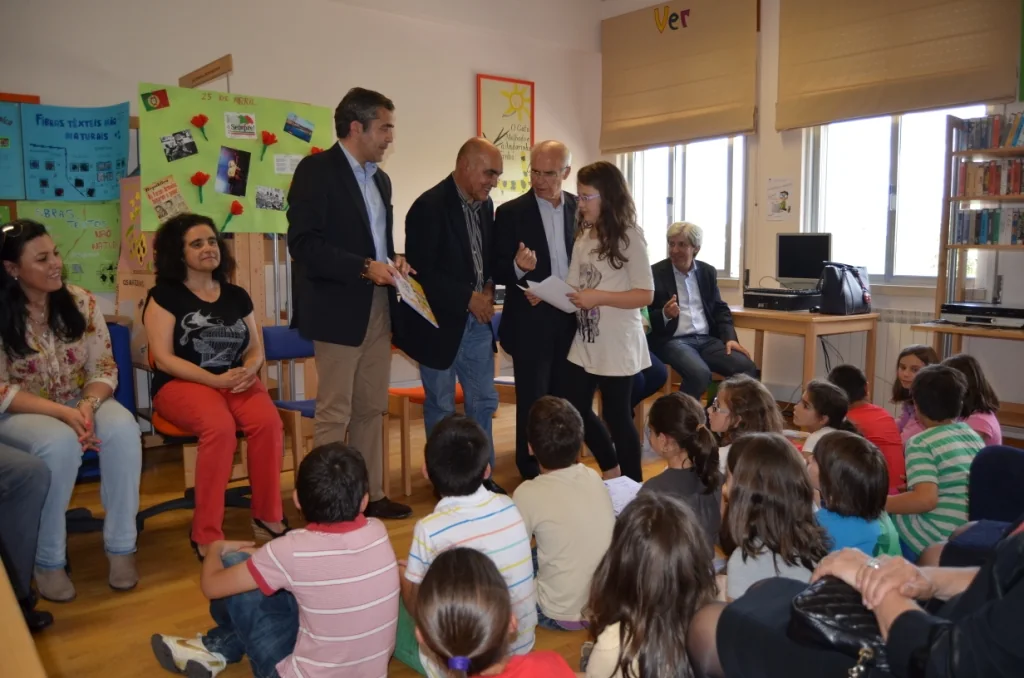
Children seated on the library floor listening to the speakers.
A visit to the school library named after Júlio Augusto Henriques.
ⓘ

A visit to the school library named after Júlio Augusto Henriques.

Source: Municipality of Cabeceiras de Basto

View source

Date given at source: .

Fonte identificada. Autoria e licença de reutilização por identificar.

Request removal or correct the photo credit

Júlio Augusto Henriques appears in the Swedish university’s records for the year it marked two centuries since Linnaeus was born.

In 1907, Uppsala University celebrated the bicentenary of Carl Linnaeus. That year’s list of honorary doctorates from the Faculty of Philosophy includes Júlio Augusto Henriques, a professor of botany from Portugal.

The Swedish celebration is recorded in the university archives. In Arco de Baúlhe, where the botanist was born, the school library later took his name. The two honours recall the same life, one for his research and one where his schooling began.

Getting to know the parish
Source and context

Universidade de Uppsala · Doutoramentos honoris causa

Universidade de Uppsala · Chronology

Municipality of Cabeceiras de Basto · Júlio Augusto Henriques

Accessed: . Editorial summary; the date of consultation is not the date of the facts.

Back to index ↑
YOUR LOCAL GUIDE

What would you like to discover?

Take a closer look.