Discover Cabeceiras de BastoFree independent guide
ViveCabeceirasYOUR GUIDE TO CABECEIRAS
ENEnglish
SearchSaved
5 STORIES · CONTINUOUS READING

From the festival to the fungi of the forest

Start with the names of autumn and look closer. There are fungi with pores, stars and tiny discs.

Follow the suggested order. Each story includes its sources and credits.

Things to try5 questions
Arco de Baúlhe and Rio Douro · autumn memories

A mushroom with many names
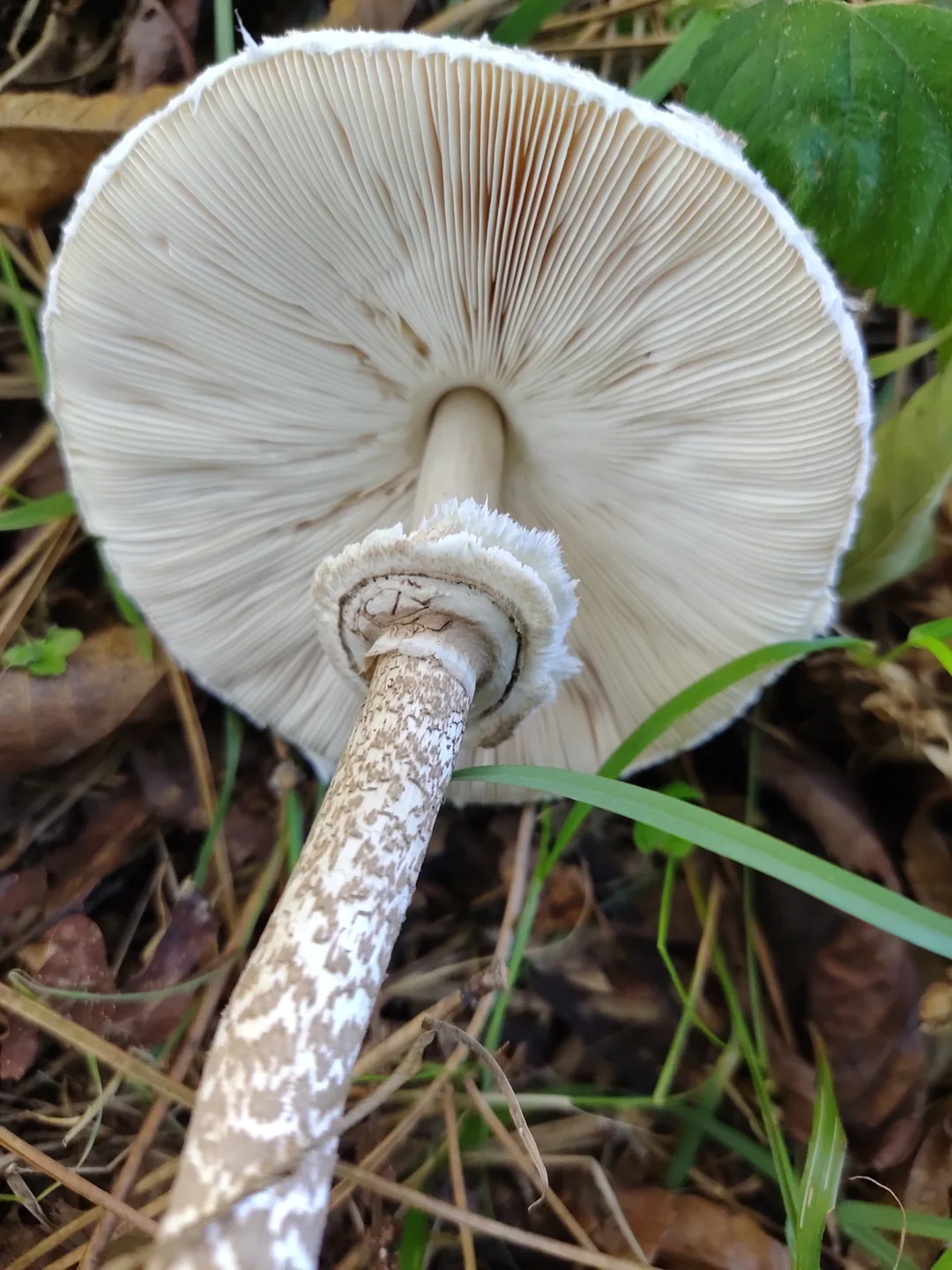
Mushroom cap seen from below, with pale gills and a ring on the stem.
Macrolepiota procera photographed in Portugal.Illustrative photograph
Carminda Santos
ⓘ

Macrolepiota procera photographed in Portugal.

Photography: Carminda Santos · CC BY 4.0

View source

Date given at source: .

Resized WebP versions under the same licence as the original.

Request removal or correct the photo credit

A 2011 field account follows the names of the santieiro between Arco de Baúlhe and Rio Douro.

On 10 November 2011, Isabel Maria Granja Fernandes met Maria Arminda Magalhães, from Morgade, selling santieiros near the school in Arco de Baúlhe. Seven days later she photographed a group of these mushrooms in Rio Douro. Her account records the two events with their places and dates.

The author recorded names such as frades, choteiros and tortulhos. She linked santieiro to the season around All Saints’ Day and identified the mushroom in the account as Macrolepiota procera. The names carry memories of the people who lived and worked here. A specialist is needed to identify a specimen safely.

Source and context

Isabel Maria Granja Fernandes — Field account of the santieiros, 2011

Accessed: . Editorial summary; the date of consultation is not the date of the facts.

Back to index ↑
Refojos de Basto · Mushroom and Chestnut Festival

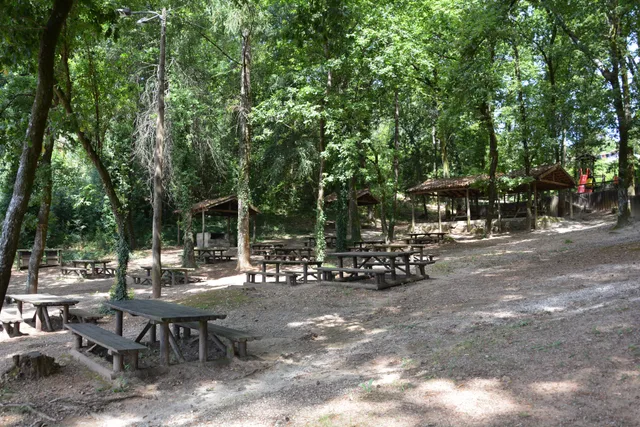
Autumn in Vinha de Mouros

Landscape at Vinha de Mouros.
The Vinha de Mouros picnic area in Refojos.ⓘ

Mushrooms and chestnuts gave their names to a festival announced in Refojos in 2019.

The municipal calendar scheduled the Mushroom and Chestnut Festival for 9 November 2019. Associação Aventura da Saúde organised it in partnership with the municipality. The venue listed was the Vinha de Mouros Environmental Education Centre in Refojos.

The festival title brings together two images of autumn. A chestnut is the fruit of a tree. A mushroom is the part many fungi produce to reproduce. To keep exploring, follow the story behind the names of santieiros or the account of the mycology meeting at Veiga.

Source and context

Municipality — Programme for the 2019 Mushroom and Chestnut Festival

Diário da República — Vinha de Mouros in the parish of Refojos

Accessed: . Editorial summary; the date of consultation is not the date of the facts.

Back to index ↑
Gondiães e Vilar de Cunhas · boletes

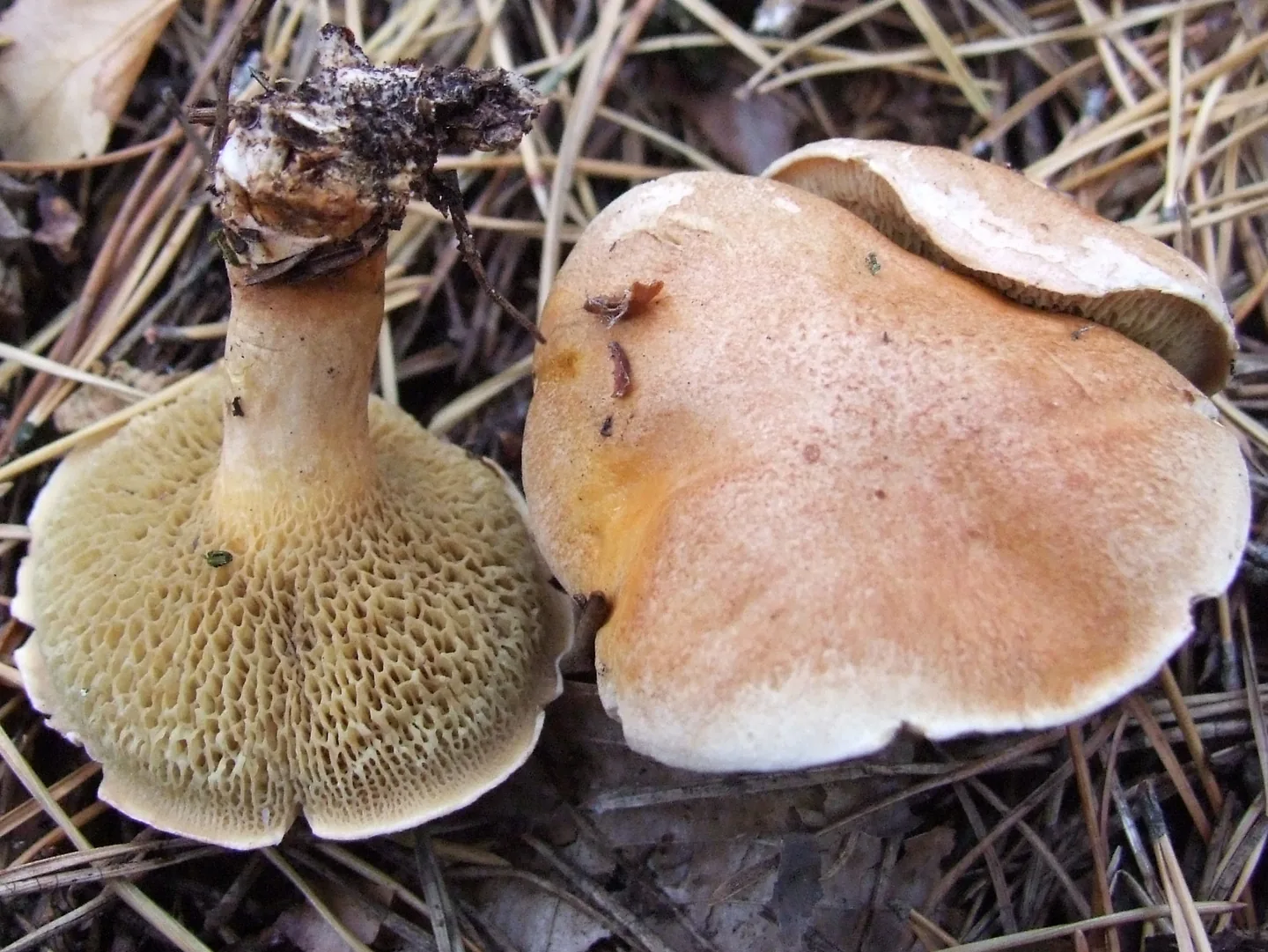
A mushroom with a honeycomb underneath

Two boletes among pine needles, one turned over to show its pores.
Suillus bovinus, with pores visible on the turned specimen.Illustrative photograph
Jerzy Opioła
ⓘ

Suillus bovinus, with pores visible on the turned specimen.

Photography: Jerzy Opioła · CC BY-SA 4.0

View source

Date given at source: .

Resized WebP versions under the same licence as the original.

Request removal or correct the photo credit

A record from Gondiães e Vilar de Cunhas reveals the pores of boletes.

On 3 May 2024, João Lima recorded a fungus identified as Suillus bovinus in the parish. Under the cap the species has broad, angular pores. Up close they look like the tiny cells of a honeycomb.

The Galician mushroom guide describes this fungus’s association with pine roots. The partnership is called a mycorrhiza. The cap and pores are the parts we can see. The link with the tree takes place in the soil.

Source and context

João Lima — Suillus bovinus observation, iNaturalist

Xunta de Galicia — Suillus bovinus profile, p. 588

Accessed: . Editorial summary; the date of consultation is not the date of the facts.

Back to index ↑
Gondiães e Vilar de Cunhas · shape and spores

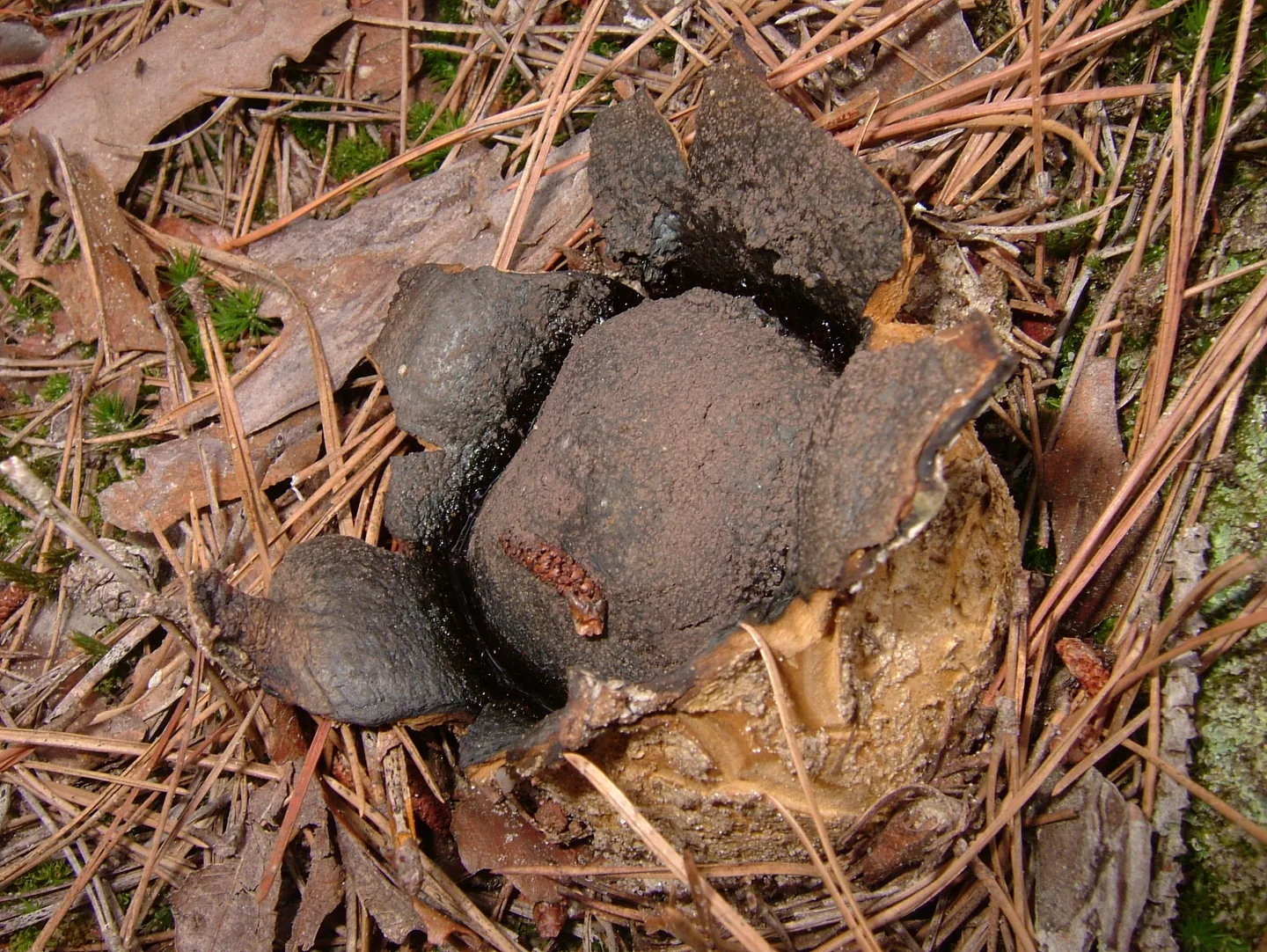
A mushroom that opens like a star

Fungus split into brown lobes around a dark, rounded centre.
Scleroderma polyrhizum in New Jersey, United States.Illustrative photograph
I. G. Safonov (IGSafonov)
ⓘ

Scleroderma polyrhizum in New Jersey, United States.

Fotografia: I. G. Safonov (IGSafonov) · CC BY-SA 3.0

View source

Date given at source: .

Resized WebP versions under the same licence as the original.

Request removal or correct the photo credit

The fungus recorded in Gondiães e Vilar de Cunhas changes shape as it matures.

On 8 November 2021, Rui Caratão recorded a fungus identified as Scleroderma polyrhizum. The Queensland Mycological Society describes a thick outer layer that splits as the fungus matures. The lobes flare out like the points of a star.

The mass of spores inside is exposed. It is a different way of releasing them from the pores beneath a bolete’s cap. The two stories show how fungi can reach the same outcome with strikingly different shapes.

Source and context

Rui Caratão — Scleroderma polyrhizum observation, iNaturalist

Queensland Mycological Society — Scleroderma polyrhizum profile

Accessed: . Editorial summary; the date of consultation is not the date of the facts.

Back to index ↑
Gondiães e Vilar de Cunhas · lichens

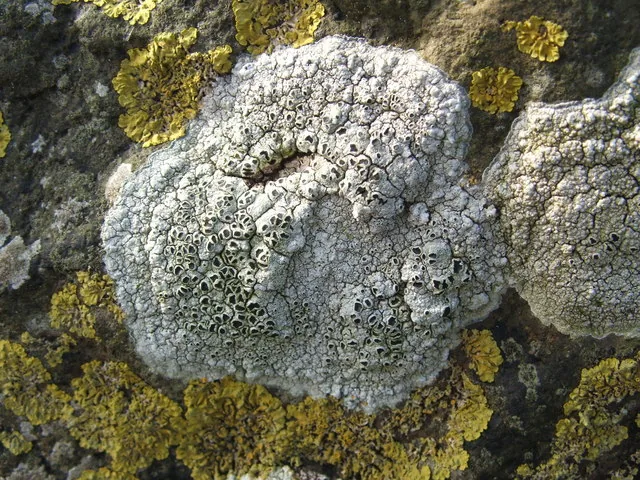
Dark discs on a pale crust

Pale lichen crust with small dark discs beside yellow patches.
Tephromela atra on rock near Cardross, Scotland.Illustrative photograph
Lairich Rig
ⓘ

Tephromela atra on rock near Cardross, Scotland.

Photography: Lairich Rig · CC BY-SA 2.0

View source

Date given at source: .

Resized WebP versions under the same licence as the original.

Request removal or correct the photo credit

A lichen recorded in Gondiães e Vilar de Cunhas looks as if it is covered in little buttons.

In May 2024, João Lima photographed a lichen identified as Tephromela atra. The University of Trieste profile describes a pale crust and small dark discs with lighter rims. These are the reproductive structures of the fungus that forms the lichen.

The discs measure just a few millimetres. The illustrative photograph gives you a closer view. Compare their outlines and rims with the shapes of other lichens in the linked story.

Source and context

João Lima — Tephromela atra observation, iNaturalist

University of Trieste — Tephromela atra profile

Accessed: . Editorial summary; the date of consultation is not the date of the facts.

Back to index ↑
YOUR LOCAL GUIDE

What would you like to discover?

Take a closer look.