Discover Cabeceiras de BastoFree independent guide
ViveCabeceirasYOUR GUIDE TO CABECEIRAS
ENEnglish
SearchSaved
6 STORIES · CONTINUOUS READING

From letters to the internet

Discover how news travelled by rail van and by wire before reaching public computers.

All stories in the order of the route. You can print this page by the browser; sources and credits follow the reading.

Things to try2 perguntas
Arco de Baúlhe · railway memories

Mail travelled by train too
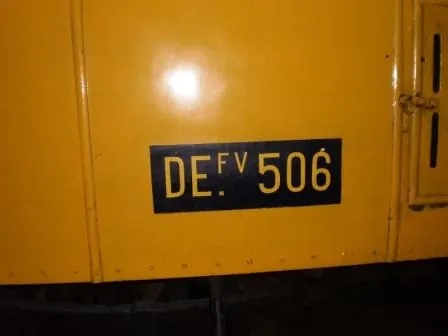
Van DE fv 506 in the Museum’s publication about the Arco de Baúlhe railway collection.
ⓘ

Van DE fv 506 in the Museum’s publication about the Arco de Baúlhe railway collection.

Source: Museu das Terras de Basto

View source

Photograph date not stated.

Individual photographer and reuse licence not stated by the source.
Request removal or correct the photo credit

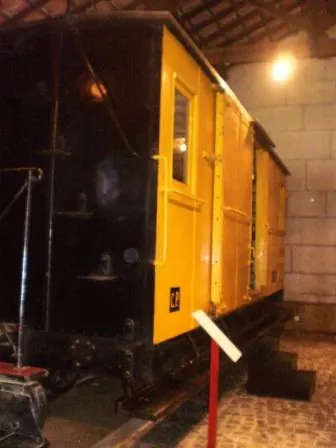
Van DE fv 506 in the Museum’s publication about the Arco de Baúlhe railway collection.
ⓘ

Van DE fv 506 in the Museum’s publication about the Arco de Baúlhe railway collection.

Source: Museu das Terras de Basto

View source

Photograph date not stated.

Individual photographer and reuse licence not stated by the source.

Request removal or correct the photo credit

Van DE.FV 506 carried more than goods.

Built in Belgium in 1908, van DE.FV 506 is presented by the Museum as a narrow-gauge vehicle for goods, parcels and mail. It had sheet-metal cladding, electric lighting and a toilet for the employee, accessed from outside. Acquisition by the Companhia dos Caminhos de Ferro de Guimarães is suggested as a possibility. The collection description, published in 2011, does not confirm whether the vehicle is currently on display.

The gauge given by the Museum is one metre. Compared with the railcar, the purpose changes: the ME5 carried passengers, while this van combined freight, parcels and mail. Travelling on the same network could mean carrying people, news or goods.

See Fact sheet: Núcleo Ferroviário de Arco de Baúlhe
Source and context

Land Museum of Basto — Van DE.FV 506, 17/07/2011

Basto Land Museum — Heritage with history: Self-propelled ME5, 22/02/2018

Accessed: . Editorial summary; the date of consultation is not the date of the facts.

Back to index ↑
Cabeceiras de Basto · office documented in 1909–1910

When news travelled by wire

A list of accounts preserves the name of the man who ran the post and telegraph office in Cabeceiras.

In 1911, the Diário do Governo published an entry about António Rodrigues. He had been in charge of the Cabeceiras de Basto post and telegraph office from July 1909 to June 1910. The accounting entry documents the office’s operation in that period.

The office’s name brings together two ways of sending news. A letter was carried to its destination. An electric telegraph sent a message along the line as signals that were turned back into words. The short entry preserves the name of one of the people behind that service.

Source and context

Diário do Governo, no. 271 — Post and telegraph office accounts, p. 4643

Accessed: . Editorial summary; the date of consultation is not the date of the facts.

Back to index ↑
Bucos, Rio Douro and Arco de Baúlhe · 1949

A call to extend the telephone network

At the railway celebrations, there was also talk of telephone service in Bucos and Rio Douro.

In January 1949, the inaugural train had already arrived in Arco de Baúlhe when the mayor, Albino Teixeira da Silva, spoke. In the same speech that welcomed the railway, he called for the telephone network to be extended to Bucos and Rio Douro.

The Gazeta dos Caminhos de Ferro recorded the request alongside others, including a better road connection to Boticas. The report captures what was being asked for that day. A separate source would be needed to date the arrival of telephone service in each parish.

Source and context

Gazeta dos Caminhos de Ferro, no. 1467 — New railway developments

Accessed: . Editorial summary; the date of consultation is not the date of the facts.

Back to index ↑
Cavez · 2002 and 2015

Post, books and neighbours under one roof

One building in Cavez brought together services that were part of everyday life in the parish.

Cavez Community Centre opened on 29 December 2002. It was designed to bring public services and community groups together in one building. The municipal description lists the parish council, a post office counter, a library branch and a health centre extension.

The description also places the sports club, folk group and Boletim Informativo de Cavez there. The municipal executive and assembly approved an agreement in 2015 delegating management of the building to the parish. The postal counter belonged to a place where everyday errands and local associations came together.

Source and context

Municipality of Cabeceiras de Basto — Cavez Community Centre

Accessed: . Editorial summary; the date of consultation is not the date of the facts.

Back to index ↑
Refojos de Basto · January 2013 announcement

The town gets a wireless network

In January 2013, the council announced that wireless internet access was available in town.

On 22 January 2013, the municipality announced the launch of a Wi-Fi hotspot in the town of Cabeceiras de Basto. People with a compatible device could connect and sign in before browsing. Access went through the municipal website.

The announcement records a new way of going online in public spaces. The Espaços Internet, already mentioned by the council in 2009, offered computers for public use. The town hotspot let people use their own device within its coverage area.

Source and context

Municipality of Cabeceiras de Basto — Launch of Wi-Fi in town

Municipality of Cabeceiras de Basto — 2009 management report

Accessed: . Editorial summary; the date of consultation is not the date of the facts.

Back to index ↑
Refojos and Arco de Baúlhe · 2016 figures

A computer to use in Refojos and Arco

The 2016 records show how public internet access spaces were used.

The Espaços Internet were listed among the municipal facilities by 2009. In May 2017, a council chart recorded usage in the previous year. The Refojos facility had 8,122 recorded uses and the Arco de Baúlhe facility 4,723. The totals may include repeat visits.

The same 2016 snapshot includes the computer room at Arco’s Casa do Povo and the multimedia room at the Casa da Juventude. Their place in the report shows how access to computers formed part of the story of community facilities.

Source and context

Municipality of Cabeceiras de Basto — Use of public facilities in 2016

Municipality of Cabeceiras de Basto — 2009 management report

Accessed: . Editorial summary; the date of consultation is not the date of the facts.

Back to index ↑
YOUR LOCAL GUIDE

What would you like to discover?

Take a closer look.