It looks like dew, but it is a trap
ⓘ
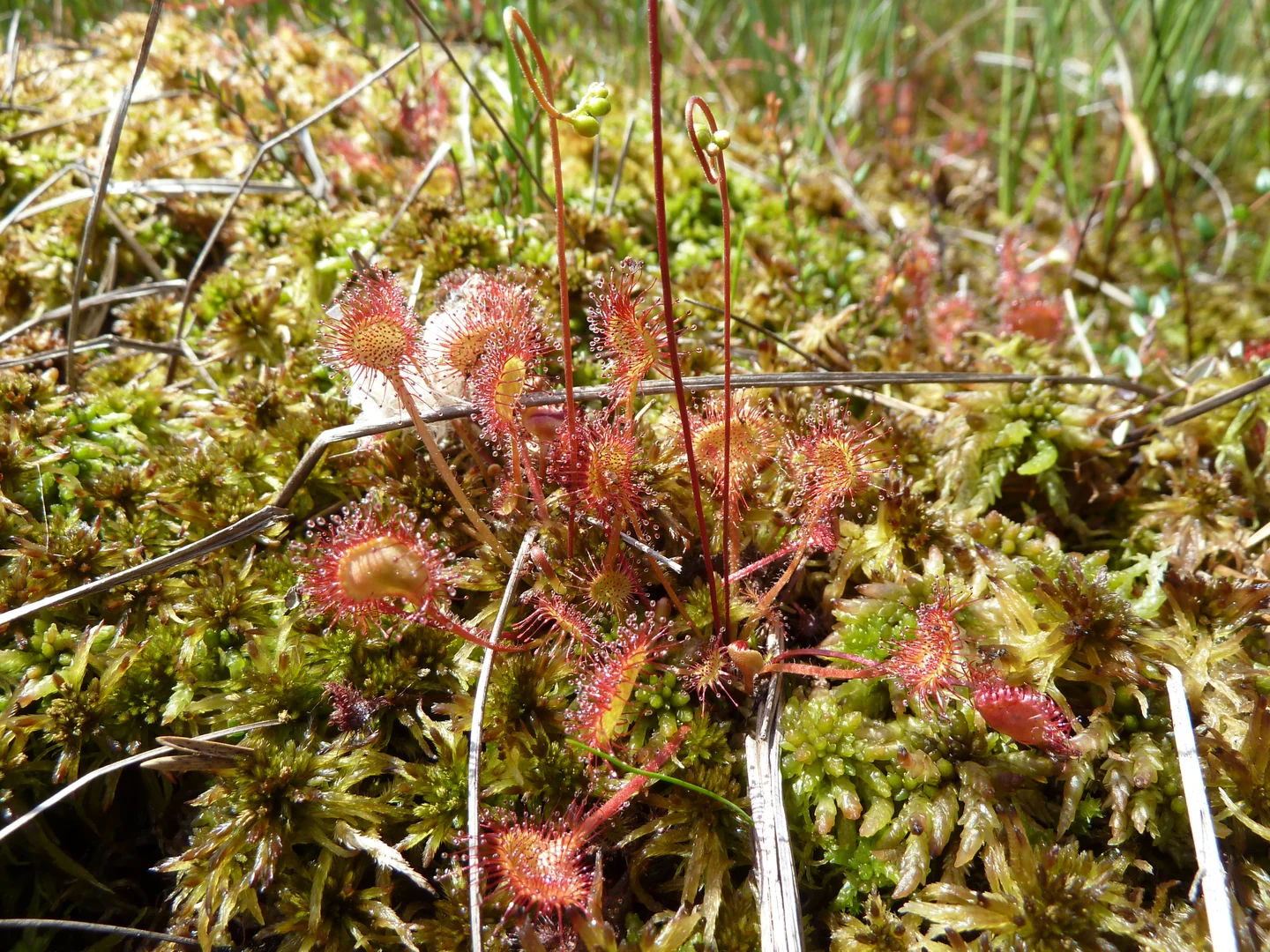
Sundew in the Swamp natural monument near Máchovo jezero, Czechia, in 2013. Species illustration, not an observation from Cabreira.
Photography: Stanislav Rada · CC BY-SA 3.0

Date given at source: .

ⓘ
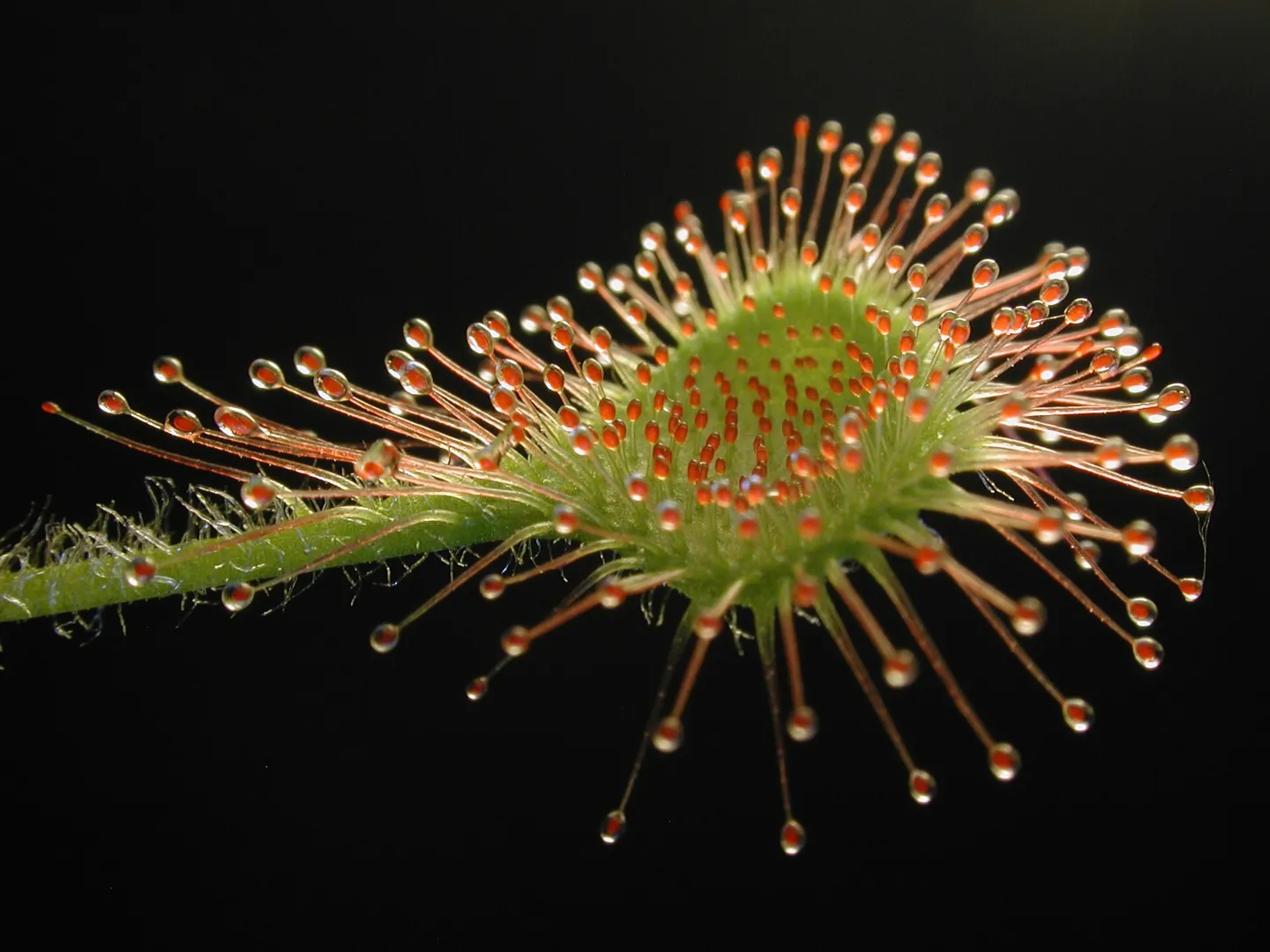
Drosera rotundifolia leaf with tentacles and droplets. Species photograph, not located in the Cabreira.
Photography: Petr Dlouhý · CC BY-SA 3.0
Photograph date not stated.

ⓘ
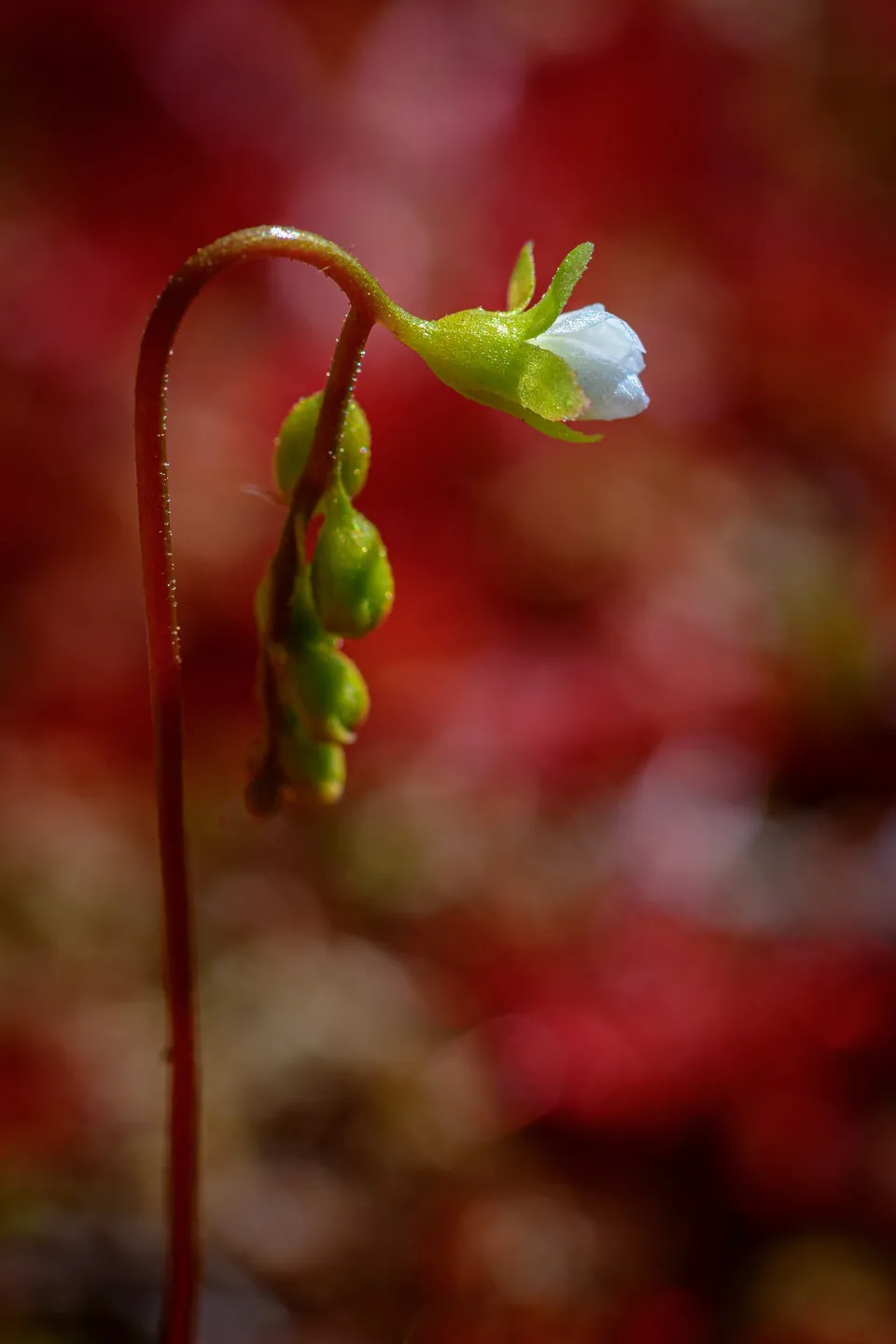
Drosera rotundifolia flower. Species illustration, not a local observation.
Photography: Stephan Sprinz · CC BY 4.0
Date given at source: .
Sundew leaves also catch food.
Text size
Your choice is saved only in this browser.
Drosera rotundifolia leaves have small glandular hairs with a sticky secretion. When an insect becomes trapped, enzymes help break it down and the plant absorbs nutrients through its leaves. This strategy can be particularly useful in nutrient-poor soils. Visit Cabeceiras mentions the species for Cabreira; the mechanism described by the US Forest Service is general biology, not an observation made in these mountains.
The trap is not the flower. Leaves form a rosette near the base; flowers grow on a stalk and fruits are capsules containing many tiny seeds. The photograph lets us compare leaves and stalks, but does not show digestion. In the USDA description, the leaf can bend around its prey: a sequence over time that one image cannot demonstrate.
Explore further: words and activities
Explore this story
Source and context
USDA Forest Service — Robin F. Matthews, Drosera rotundifolia, February review, 1994
Accessed:
Visit Cabeceiras — natural heritage of Serra da Cabreira
Accessed:
Editorial summary; the date of consultation is not the date of the facts.