Honey sweetens rabanadas too
ⓘ
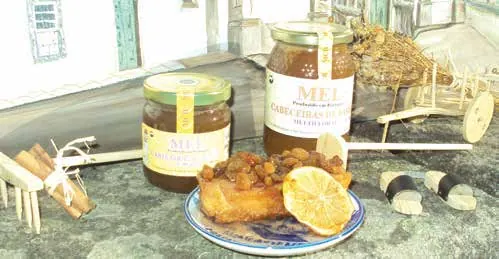
Honey rabanada in the Cabeceiras presentation in the 2014–2015 gastronomic guide.
Source: Turismo do Porto e Norte de Portugal
Photograph date not stated.
Individual photographer and reuse licence not stated by the source.
A dessert helps tell the story of how local flavours were promoted.
Text size
Your choice is saved only in this browser.
In the food programme of 23–25 March 2012, Cabeceiras presented roast kid as its speciality and rabanadas with honey as a regional sweet. The municipal announcement also links the table to Vinho Verde, meat and honey. This combination shows how food promotion brings products and preparations together. It is the historical programme of that edition, not a current menu or a claim that rabanadas originated exclusively in the municipality.
The 2015 guide adds a preparation with milk and honey. Compare it with Dídia Teixeira’s wine version: the same name can hold different recipes.
Rabanada with honey — 2015 guide
Tick off ingredients as you gather them. Checkmarks last only on this page. Any time shown for the reading journey is reading time, not cooking time.
Go to preparation ↓Ingredients
Method at a glance
Back to ingredients ↑Tick off each step as you finish it. You can untick it; checkmarks last only on this page.
Summary of the guide: it gives no number of servings and does not explain how to use the lemon listed. The recipe dates from 2015; the announcement mentioned in the story dates from 2012.
Read the original recipe →Explore further: words and activities
Explore this story
A bread, different desserts
Open an option and choose the story.
The recipe for Dídia Teixeira
The red wine also reached the sweet →Bread turns into scrambles
The bread also made the feast →Where does honey come from?
The landscape also reaches the honey →
Source and context
Municipality — Gastronomic Weekends, 23–25/03/2012
Accessed: . Editorial summary; the date of consultation is not the date of the facts.