Pedraça: houses, fields and a link to Coimbra
Local history has connections extending beyond the valley.
Text size
Your choice is saved only in this browser.
Pedraça’s inhabited landscape invites us to look beyond the church. The municipal presentation highlights Casa do Paço, Casa de Parada, and the houses of the baron of Basto and Paço de Vila. It describes Parada as Brazilian in taste: an architectural clue that cannot, by itself, reconstruct an owner’s travels or fortune.
These houses belong to the same parish described as fertile and rich in water, associated with farming and flax. Bringing buildings and fields together helps us see heritage as part of a working landscape. The description does not establish every construction date or person responsible.
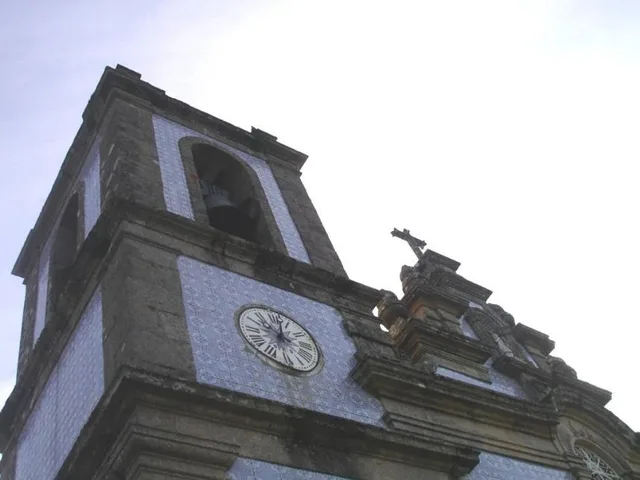
In 1758, Saint Marina’s parish church had a connection to Coimbra: its rector was nominated by the rector of São Jerónimo College. The document places Pedraça within Cabeceiras and the district of Guimarães. Local religious life was therefore connected with a distant institution.
There is also a tradition associating a house with the Constable. That memory deserves to be told as tradition, distinguished from what documents demonstrate. Pedraça gains depth when houses, fields, institutions and stories are read together, without turning a heritage reference into an invitation to enter private property.
Explore further: words and activities
Explore this story
Source and context
Municipality — parish presentation of Pedraça
Accessed:
Municipality — Parish Memories of Pedraça (1758), transcript of José Viriato Chapel (2003)
Accessed:
Municipality — Parish Memories of Pedraça, 1758; transcription of José Viriato Chapel (2003)
Accessed:
Editorial summary; the date of consultation is not the date of the facts.