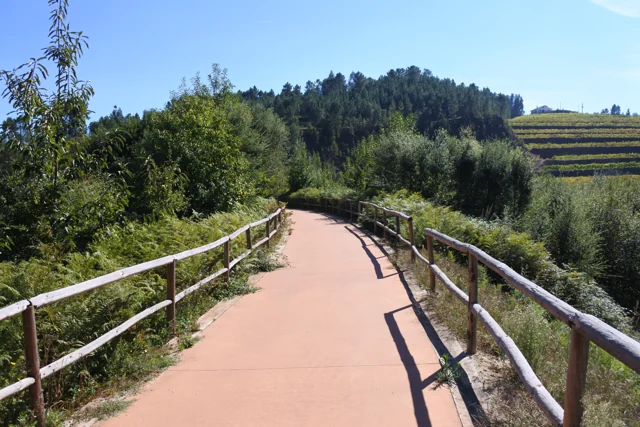
Pitches, pedals and tatamis
Start at the old railway and meet the people who formed teams, cycled together or brought judo to a village.
Start with the matching story →Follow a series of stories at your own pace.
Start with a journey from your selection.
Start at the old railway and meet the people who formed teams, cycled together or brought judo to a village.
Start with the matching story →
Petroleum container MTB 436 — inventory presented by the Terras de Basto Museum.
Source: Museu das Terras de Basto
Photograph date not stated.
Individual photographer and reuse licence not stated by the source.
Start with the museum’s oil cans, then visit the story of Cefra and see how electricity changed villages, cloisters and streets.
Start with the matching story →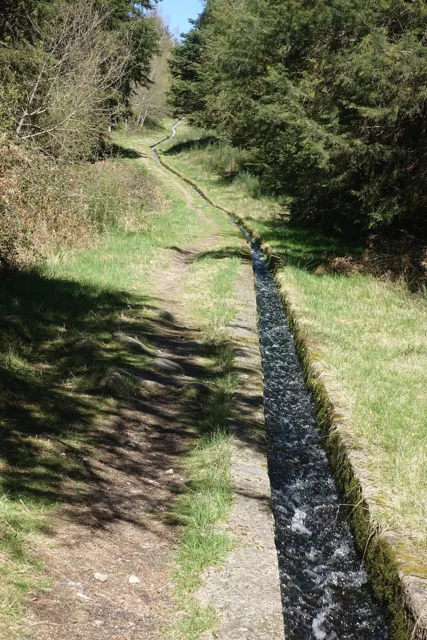
Follow the water from mills and gardens to the front door. Along the way, discover what the church bell told irrigators.
Start with the matching story →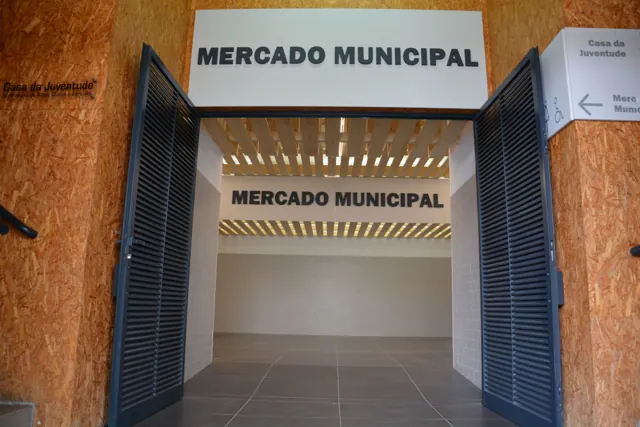
Entrance of the Municipal Market, in the municipal gallery.
Source: Municipality of Cabeceiras de Basto
Photograph date not stated.
Individual photographer and reuse licence not stated by the source.
A scientist remembered in school, books, assistance, memory and meetings in the market. Five stories of people and institutions that are part of the life of the municipality. It is a sequence of reading, not a script with access to the buildings.
Start with the matching story →Ten readings accompany the water in the memories of 1758: cultures, margins, mills and differences between parishes. Vila Nune's account also looks at Atei, on the other side of Tâmega. Compares what each author observed, without turning the documents into visiting maps.
Start with the matching story →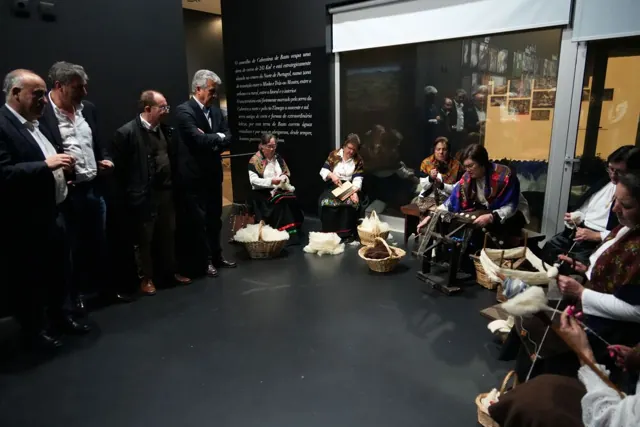
The Arts and Crafts gathering at Casa do Tempo, documented by the municipality in April 2025.
Source: Municipality of Cabeceiras de Basto
Photograph date not stated.
Individual photographer and reuse licence not stated by the source.
Twelve stories to know the relief, archeology, crafts, pilgrimages and associative life of Outeiro. It compares three inventoried sites, enters a workshop and accompanies footwear to the fair. Schemes and activities help to explore; it is a reading route without indicating access to sites.
Start with the matching story →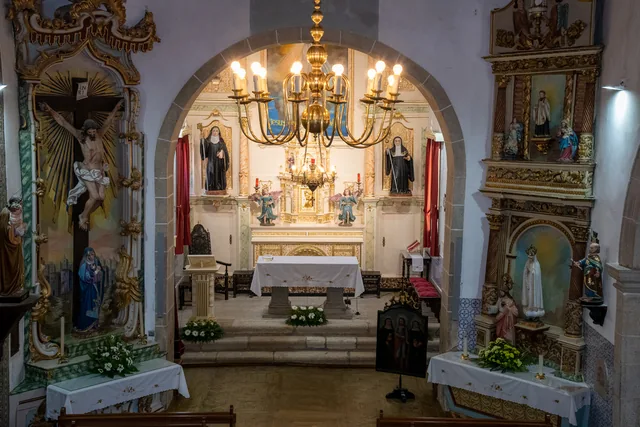
Interior of Santa Senhorinha church.
Source: Visit Cabeceiras — Município de Cabeceiras de Basto
Photograph date not stated.
Individual photographer and reuse licence not stated by the source.
Seven stories to link the river to the fields, bridges, fairs and news. Explore the links between readings and set up a mail calendar of 1758. The old documents keep their dates; do not announce current services or parties.
Start with the matching story →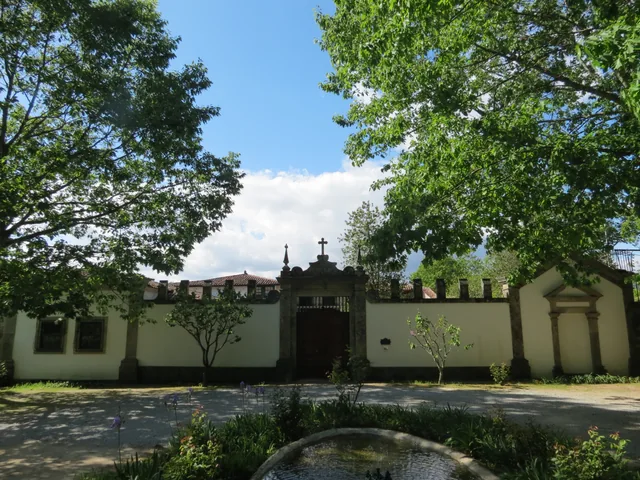
Casa de Pielas and garden.
Source: Museu das Terras de Basto
Photograph date not stated.
Individual photographer and reuse licence not stated by the source.
Nine readings between gardens, chapels, documents and people. Opens the chronologies, distinguishes dates from buildings and documents and knows the route of Baltazar Castro. It is a reading sequence, without assuming access to private properties.
Start with the matching story →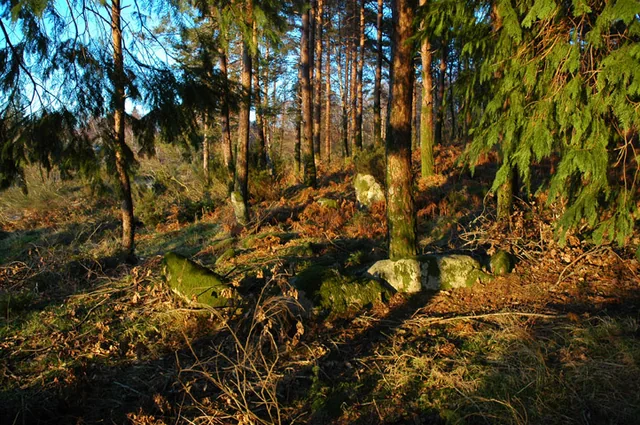
Remains of Aldeia Velha de Toninha.
Source: Carta Arqueológica de Cabeceiras de Basto
Photograph date not stated.
Autoria da fotografia e licença de reutilização não identificadas na fonte.
Eleven readings between villages, chapels, watering, animals and work. Compares the portrait of 1758, knows the pison and ends in the memory of collective shepherding of Cambezes. Reports maintain their time and do not define current conditions of visit.
Start with the matching story →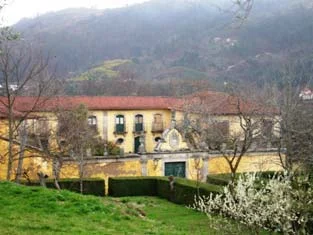
Nine stories between water, houses and collective life of São Nicolau. From the bridges and mills described in 1758 to the use of water in Covas, compares documents from different times. It continues by architecture, by the old school and by the memory that dances.
Start with the matching story →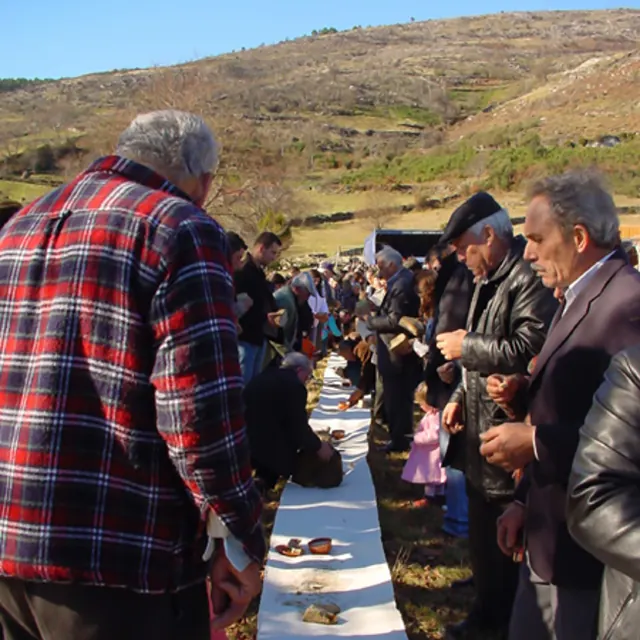
Sharing at the table during Samão’s Festa das Papas, in the municipal documentation.
Source: Municipality of Cabeceiras de Basto
Photograph date not stated.
Individual photographer and reuse licence not stated by the source.
Twelve stories link documents, villages, bridges, water, crafts and sharing of the popes. Draws the levada of the neighborhood, compares materials and discovers the people behind the memories. It is a path of reading, without implicit visits or events.
Start with the matching story →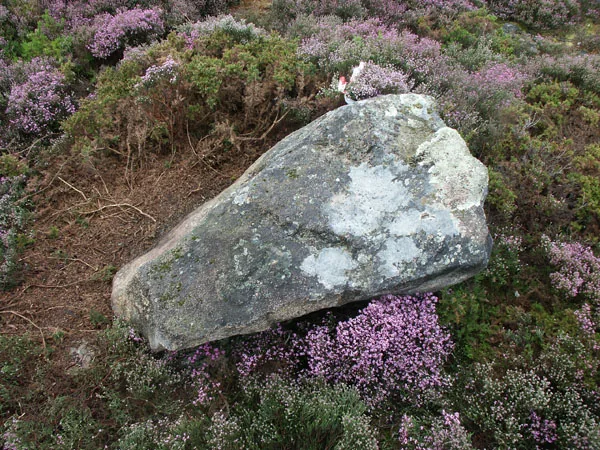
Engraved rock in the Marmoirais complex.
Source: Carta Arqueológica de Cabeceiras de Basto
Photograph date not stated.
Autoria da fotografia e licença de reutilização não identificadas na fonte.
Nine stories to connect the mountains, fields and water to the marks of local power. Observes tower and pillory, compares the administration of 1758 and discovers two dates in Casa da Ramada. It is a reading route without indicating a walk or access to the buildings.
Start with the matching story →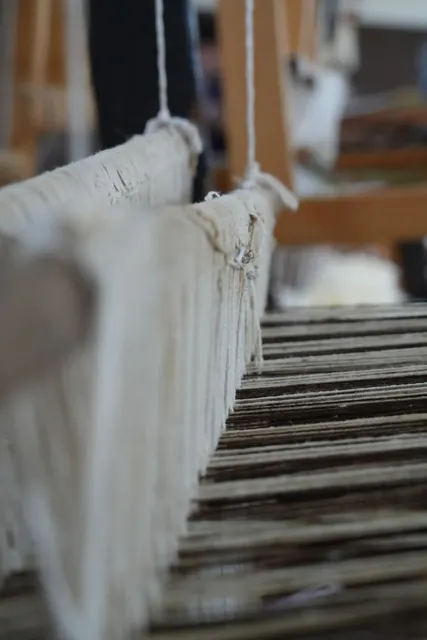
Loom and threads at Casa da Lã in Bucos.
Source: Municipality of Cabeceiras de Basto
Photograph date not stated.
Individual photographer and reuse licence not stated by the source.
Eight stories about between help, water, harvests, wool, fabrics and materials of the houses. Find out how the work connected the villages to the fairs and try to organize a wheel of shifts on paper. It is a reading route, without displacements.
Start with the matching story →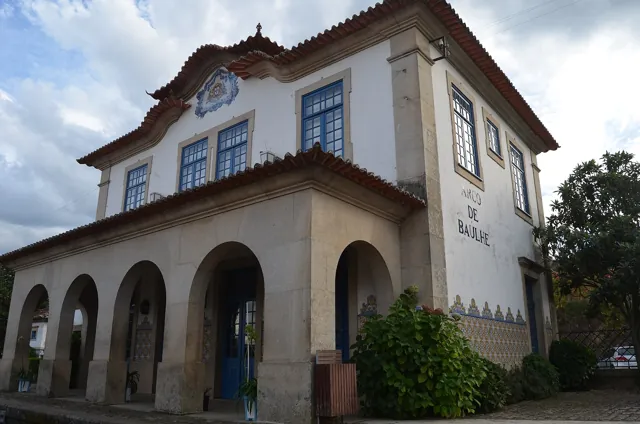
Arco de Baúlhe station building with its arched gallery.
Photography: Pedro from Maia (Porto), Portugal · CC BY 2.0
Date given at source: .
Nine stories follow the railway’s arrival, its trains, life at the station and the old line’s transformation into a greenway. Two timelines trace the works and later uses. One story looks at the Matamá bridge in Celorico de Basto.
Start with the matching story →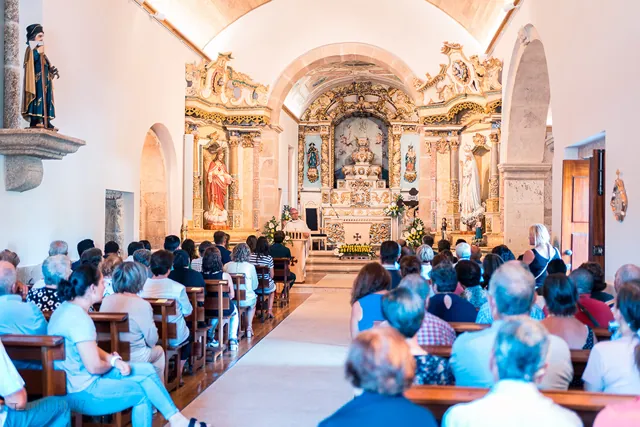
Interior of the church of São Tiago da Faia during the celebration documented by the Archdiocese in 2022.
Fotografia: DACS
Photograph date not stated.
Fotografia creditada como DACS na notícia da Arquidiocese; licença de reutilização não identificada.
Twelve stories to get to know Faia: the sixteen places told in 1758, agriculture, tannaria, manual footwear, chapels and the recent care of the heritage. Comparing names and testimonies, explores photographs and goes to the records of the church and the Lady of Amparo. Reading route, without indicating a visit itinerary.
Start with the matching story →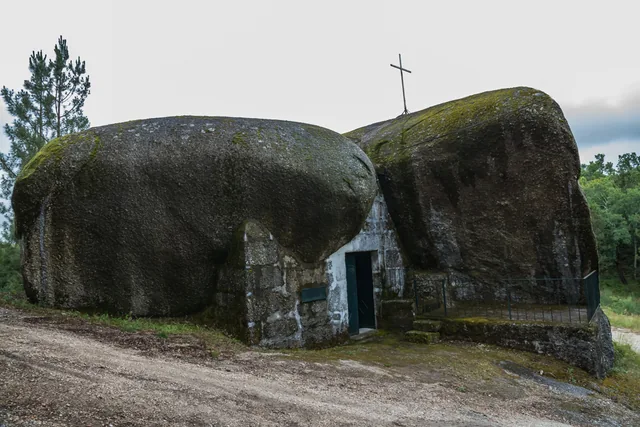
Santa Catarina chapel between granite boulders.
Source: Visit Cabeceiras — Município de Cabeceiras de Basto
Photograph date not stated.
Individual photographer and reuse licence not stated by the source.
Eleven readings link fields, water, work, fair, justice, church and chapels of Alvite. It compares the strength of animals with the uses of water and the different charges of places of worship. The memories of 1758 preserve their time; the sequence does not indicate a walk.
Start with the matching story →Loom and threads at Casa da Lã in Bucos.
Source: Municipality of Cabeceiras de Basto
Photograph date not stated.
Individual photographer and reuse licence not stated by the source.
Eight stories link wool, fields, rivers, mail and places of worship of Bucos. It compares the daily life of 1758 with the transmission of crafts in 2024–2026, including a meeting in Rio Douro. The Casa da Lã has its own record to prepare a visit.
Start with the matching story →Arco de Baúlhe station building with its arched gallery.
Photography: Pedro from Maia (Porto), Portugal · CC BY 2.0
Date given at source: .
From a photographer of Refojos to the arch archives and the conservation of Ponte de Cavez: five ways to convey the story.
Start with the matching story →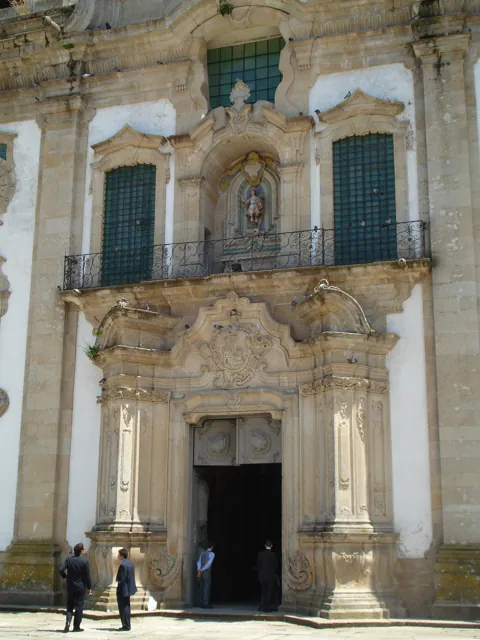
Detail of Refojos Monastery’s façade.
Photography: Ricardo Martins · CC BY 2.0
Date given at source: .
Books, people and a medieval chalice connect Refojos to other cities. Discover the decor of the piece, the difference between the donor and the goldsmith and their journey to Coimbra, before returning to the new lives of the monastery and to the names of the streets.
Start with the matching story →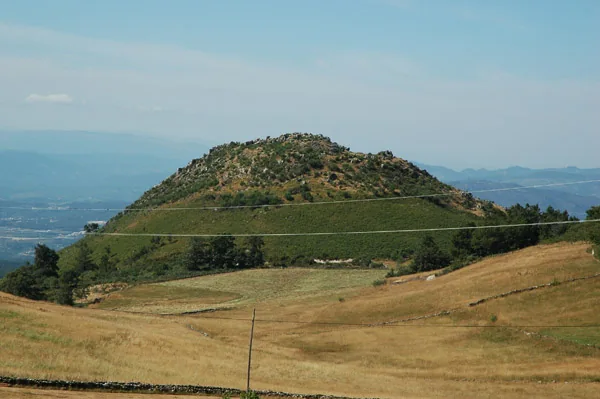
Monte do Castelo in Formigueiro.
Source: Carta Arqueológica de Cabeceiras de Basto
Photograph date not stated.
Autoria da fotografia e licença de reutilização não identificadas na fonte.
Fossas, villages, sculptures and graves: eight readings bring different times closer to the territory. Follow archaeological interpretations and their uncertainties. It is a reading sequence, not a roadmap for access to sites.
Start with the matching story →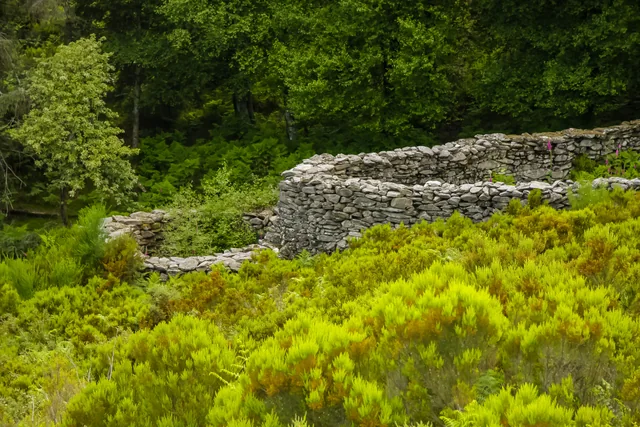
Stone walls of the wolf trap at Uz.
Source: Visit Cabeceiras — Município de Cabeceiras de Basto
Photograph date not stated.
Individual photographer and reuse licence not stated by the source.
Eight stories to investigate documents, numbers and borders. Find out why they review forals, distinguish aggregates from inhabitants and open the chronology of Passos. Proposals help separate what a source confirms from the questions it leaves unanswered.
Start with the matching story →Detail of Refojos Monastery’s façade.
Photography: Ricardo Martins · CC BY 2.0
Date given at source: .
Eight stories link the medieval community, the materials of the church, the cultivated fence and the new uses of the surroundings. Compares the organ, the choir and the Zimbabwe in the descriptions; follows the stream to the history of Casa do Tempo. Includes chronologies, photographs and activities.
Start with the matching story →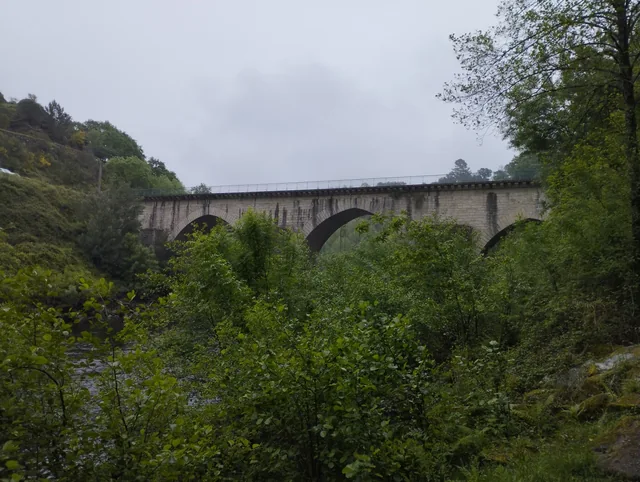
Arches of Ponte de Cavez seen from the riverbed.
Source: Museu das Terras de Basto
Photograph date not stated.
Individual photographer and reuse licence not stated by the source.
Eight stories to accompany the bridge over the centuries and enter the lives of the villages. Opens the chronology, distinguishes legend and document and discovers chapels, mail, mills and coal. It is a route of reading, without indicating a pedestrian itinerary.
Start with the matching story →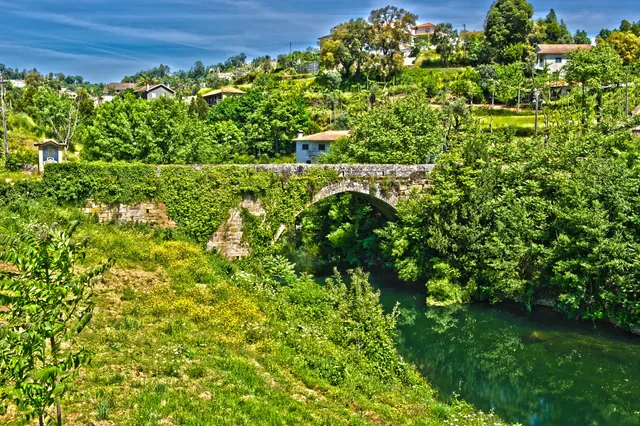
Ponte Velha in Arco de Baúlhe among vegetation.
Source: Visit Cabeceiras — Município de Cabeceiras de Basto
Photograph date not stated.
Individual photographer and reuse licence not stated by the source.
Four stories to discover the shape of the bridges, the works that transform them and the old line that gained new steps. A path of reading between Cavez and Arco de Baúlhe e Vila Nune, without indicating a pedestrian itinerary.
Start with the matching story →

