Try drawing the route
Cabeceiras de Basto · water heritage documented in 2011
Water had a built route too
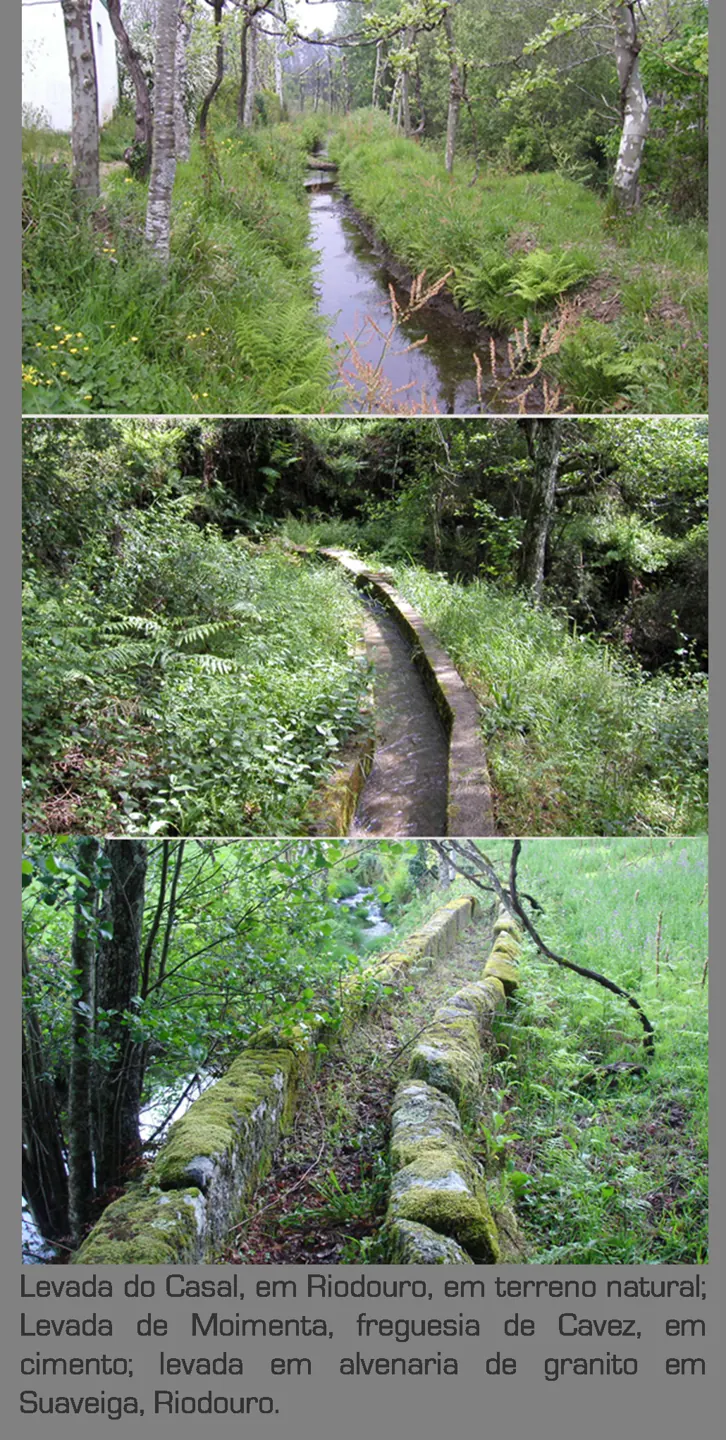
According to the Museum, levadas carry water from weirs or pools to mills. In Cabeceiras, the study describes both channels made from worked granite and channels in firm ground or cut into rock. Understanding a mill means looking at the whole: the building, water intake and water supply. This explains documented heritage; it does not indicate access to the channels. Materials also reveal change. The 2011 article mentions rebuilding in cement or fibre cement that altered the original form of some levadas. Distinguishing earlier forms from later interventions helps us read this heritage as a history of adaptation, not a landscape frozen in time.
ⓘ
Examples of mill channels presented by the Museu das Terras de Basto.
Source: Museu das Terras de Basto
Photograph date not stated.
Individual photographer and reuse licence not stated by the source.
Vamos experimentar?
- Draws three elements on a sheet: a weir or puddle, a levada and a mill.
- Connect them with arrows and write with each one: store, drive or use the water to move the mill.
- Read the story of the water shifts. Add to the drawing a question about who decided when each person could use the water.
A scheme to understand reading, without having to go into a mill or go through a levada.
Open a história e os seus recursos →Sources of this proposal
- Basto Land Museum — Mills of Cabeceiras de Basto: water capture and conduction, 07/07/2011Consultation/revision: 2026-11-07
My findings
An idea, a drawing or a question to go on.