Discover Cabeceiras de BastoFree independent guide
ViveCabeceirasYOUR GUIDE TO CABECEIRAS
ENEnglish
SearchSaved
CHOICE · EXPERIMENTARY · TAKE

Your notebook

Choose up to six ideas, try them and take your discoveries with you.

2 de 6 propostas escolhidas · faça-as ao seu ritmo.

PROPOSTA 1 DE 2 · Travel through time

Try observing

Reorder or remove

Gondiães and Vilar de Cunhas · memory and landscape

Vamos experimentar?

  1. Look at the photo of the portal and list only the elements you can see.
  2. Compared to the three granaries mentioned in the text: what depends on the written description?
  3. Imagine a caption that distinguishes the frame of the photograph from the remaining patrimonial set.

An activity to try at your own pace, without collecting specimens.

Discover the story

A house with three granaries

At Casa de Chouzas, three 19th-century granaries stand alongside the manor house highlighted by the municipality. The group connects two functions: living and storing the harvest. Rather than looking only at the main house, it is worth recognising the importance of buildings supporting agriculture. The introduction to Vilar de Cunhas places this heritage in a landscape of plateau and mountain, shaped by farming and pastoralism. House and granaries can be read in that working context, although the source does not detail each property’s production. The house’s dating is less firm: the municipality presents it as perhaps 19th-century, while assigning the granaries to the 19th century. That difference should remain visible. The photograph accompanying the reading shows the portal, not the three granaries. The heritage reference does not confirm access to the group.
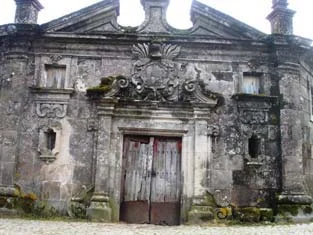
Municipal archive photograph: Casa de Chouzas.
Portal da Casa de Chouzas · photo of the municipal inventory; the granaries do not appear in this framework.ⓘ
Open a história e os seus recursos →
Sources of this proposal

My findings

An idea, a drawing or a question to go on.

PROPOSTA 2 DE 2 · Life you do not always see

Connects food to the landscape

Reorder or remove

Bats · general ecological roles

Vamos experimentar?

  1. It makes three cards: insects, fruits and pollen.
  2. Add to each one the ecological relationship described in the text.
  3. Check the examples worldwide and open the related reading to know the local document register.

An activity of reading and comparison; it is not necessary to seek shelters or approach animals.

Discover the story

Small hunters with a role in the landscape

Insect-eating bats connect the night with fields and forests. By feeding, they help control insect populations, including species that can affect farming and trees. The ICNF text invites us to discover this ecological role beyond the myths surrounding bats. Worldwide, there are other diets and relationships: fruit-eating bats can contribute to forest regeneration, while pollen-feeding bats take part in pollination. These global examples do not assign those diets to species recorded in Cabeceiras. Thinking about food is a way to connect an animal with the landscape. What resources does it seek? What other organisms are involved? Ecological roles are not limited to the number of individuals we can see. In the local story, this explanation accompanies the documentary record of the greater horseshoe bat; it adds no new observation.

Open a história e os seus recursos →
Sources of this proposal

My findings

An idea, a drawing or a question to go on.

YOUR LOCAL GUIDE

What would you like to discover?

Take a closer look.