Discover Cabeceiras de BastoFree independent guide
ViveCabeceirasYOUR GUIDE TO CABECEIRAS
ENEnglish
SearchSaved
CHOICE · EXPERIMENTARY · TAKE

A notebook.
Your findings.

Up to six proposals of Cabeceiras, in your own order, to do it at home, in company or on a break.

2 de 6 propostas escolhidas · faça-as ao seu ritmo.

PROPOSTA 1 DE 2 · Travel through time

Try observing

Gondiães and Vilar de Cunhas · memory and landscape

A house with three granaries

At Casa de Chouzas, three 19th-century granaries stand alongside the manor house highlighted by the municipality. The group connects two functions: living and storing the harvest. Rather than looking only at the main house, it is worth recognising the importance of buildings supporting agriculture. The introduction to Vilar de Cunhas places this heritage in a landscape of plateau and mountain, shaped by farming and pastoralism. House and granaries can be read in that working context, although the source does not detail each property’s production. The house’s dating is less firm: the municipality presents it as perhaps 19th-century, while assigning the granaries to the 19th century. That difference should remain visible. The photograph accompanying the reading shows the portal, not the three granaries. The heritage reference does not confirm access to the group.
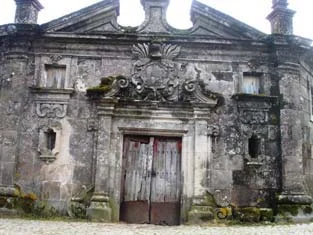
Municipal archive photograph: Casa de Chouzas.
Portal da Casa de Chouzas · photo of the municipal inventory; the granaries do not appear in this framework.ⓘ

Vamos experimentar?

  1. Look at the photo of the portal and list only the elements you can see.
  2. Compared to the three granaries mentioned in the text: what depends on the written description?
  3. Imagine a caption that distinguishes the frame of the photograph from the remaining patrimonial set.

An activity to try at your own pace, without collecting specimens.

Open a história e os seus recursos →
Sources of this proposal

My findings

An idea, a drawing or a question to go on.

PROPOSTA 2 DE 2 · Life you do not always see

A record at dusk

Bats · general biology and observation, without roost locations

A different home through the year

Bats’ needs change throughout the year. The ICNB guide explains that many species use different roosts: their resting place need not always be the same. In maternity colonies, females and young gather during a stage that ends when the young become independent. Hibernation meets another challenge: saving energy in winter. Body temperature and the organism’s activity decrease. These are general biological explanations, not a calendar of roost occupation in Cabeceiras or a description of every species. For observation, Morcegos.pt suggests dusk, while some light remains, and recommends avoiding shining lights at the animals. We can watch their flight from a safe public space, without entering roosts or trying to touch bats.

Vamos experimentar?

  1. Choose a safe public space that you already know and write down the date, the time and if there is still natural light.
  2. If you see animals flying, describe what you can observe without pointing lights at them or trying to get close.
  3. If you don't see any, record that result, too.

Not entering caves, mines or buildings, not touching animals or spreading shelters. The observed flight is not enough to identify a species.

Open a história e os seus recursos →
Sources of this proposal

My findings

An idea, a drawing or a question to go on.

YOUR LOCAL GUIDE

What would you like to discover?

Take a closer look.