Discover Cabeceiras de BastoFree independent guide
ViveCabeceirasYOUR GUIDE TO CABECEIRAS
ENEnglish
SearchSaved
CHOICE · EXPERIMENTARY · TAKE

A notebook.
Your findings.

Up to six proposals of Cabeceiras, in your own order, to do it at home, in company or on a break.

4 de 6 propostas escolhidas · faça-as ao seu ritmo.

PROPOSTA 1 DE 4 · Travel through time

Try observing

Gondiães and Vilar de Cunhas · memory and landscape

A house with three granaries

At Casa de Chouzas, three 19th-century granaries stand alongside the manor house highlighted by the municipality. The group connects two functions: living and storing the harvest. Rather than looking only at the main house, it is worth recognising the importance of buildings supporting agriculture. The introduction to Vilar de Cunhas places this heritage in a landscape of plateau and mountain, shaped by farming and pastoralism. House and granaries can be read in that working context, although the source does not detail each property’s production. The house’s dating is less firm: the municipality presents it as perhaps 19th-century, while assigning the granaries to the 19th century. That difference should remain visible. The photograph accompanying the reading shows the portal, not the three granaries. The heritage reference does not confirm access to the group.
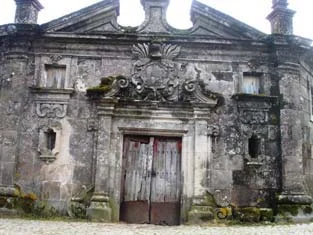
Municipal archive photograph: Casa de Chouzas.
Portal da Casa de Chouzas · photo of the municipal inventory; the granaries do not appear in this framework.ⓘ

Vamos experimentar?

  1. Look at the photo of the portal and list only the elements you can see.
  2. Compared to the three granaries mentioned in the text: what depends on the written description?
  3. Imagine a caption that distinguishes the frame of the photograph from the remaining patrimonial set.

An activity to try at your own pace, without collecting specimens.

Open a história e os seus recursos →
Sources of this proposal

My findings

An idea, a drawing or a question to go on.
PROPOSTA 2 DE 4 · Crafts and memories

Compare two portraits of Faia

Faia · sacred art, 2025

Roots and light renew a chapel

Olive-tree roots shaped the new altar and ambo in the chapel of Nossa Senhora do Amparo. The Archdiocese of Braga’s report of 6 October 2025 attributes the work to Atelier Amadeus and describes a refurbishment centred on the altar. A suspended cross forms part of the element called Corpo de Luz. Parish priest Rui Filipe Marques Araújo explained the lighting’s symbolism: groups of lights refer to the Trinity, the Evangelists and the Apostles. The publication also highlights the contribution of artists, technicians, workers and the community. The intervention shows heritage continuing to gain new forms and meanings; the 2025 report does not give visiting hours. The account presents the celebration, presided over by José Cordeiro, as a gathering of Faia with the communities of Arco de Baúlhe and Vila Nune. The choice of roots also receives a religious interpretation: according to the priest, transforming previously discarded material expresses renewal and redemption. This is the symbolic reading attributed to him in the report, distinct from the description of the materials. To understand the work, we can look at both layers: how it was made and the meaning given to it.

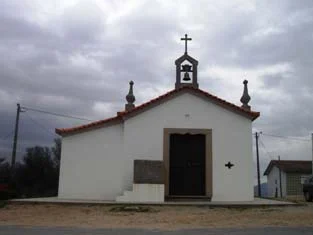
Archive photograph: Capela da Senhora do Amparo da Faia.
Outside the Lady of Amparo from Faia. The photograph places the chapel; it does not show the new altar or interior lighting.ⓘ

Vamos experimentar?

  1. Read the history of the chapels described in 1758 and this reading about the intervention of 2025.
  2. On a sheet, separate what each source describes: location and relationships with the community; materials, light and artistic creation.
  3. Write down a question that remains unanswered. The old reference does not allow dating each part of the current building.

A comparison of sources to make at home; does not require access to the interior of the chapel.

Open a história e os seus recursos →
Sources of this proposal

My findings

An idea, a drawing or a question to go on.

PROPOSTA 3 DE 4 · Life you do not always see

A Transforming Family

Occurrence mentioned in the environmental document

The Iberian wolf

The environmental assessment of the municipal master plan records a wolf pack in the area, based on ICNF information. This reflects Cabeceiras’s ecological importance; it is not a promise of a sighting. Learning about this presence does not require searching for the animals or revealing their shelters. The national platform links a shortage of wild prey with livestock consumption and conflict with pastoral communities. It presents protecting flocks and restoring natural prey as complementary parts of conservation. A pack is also a family that changes. The platform describes a breeding pair, offspring from different years and sometimes other related adults. The group defends a territory, but its composition changes through births, growth and dispersal. In the general cycle described for Portugal, pups are born in late April or May. During summer, rendezvous sites become centres of family activity; in autumn, the young begin accompanying adults as they travel and hunt. This is not an observation calendar for a particular pack. As they grow, some young wolves leave their original group to seek a territory, a mate or another pack. Others stay longer when enough food is available. A count at one moment therefore does not describe an unchanging family: social life follows the annual cycle and the opportunities offered by the landscape.

Vamos experimentar?

  1. Draws a family group with adults and pups from the description.
  2. Add arrows to represent growth and output of young people from the group.
  3. Compare two moments of the drawing: what would change in a countdown?

General biology scheme; it does not represent the number of wolves in a local pack.

Open a história e os seus recursos →
Sources of this proposal

My findings

An idea, a drawing or a question to go on.

PROPOSTA 4 DE 4 · Read the landscape through the plants

Try observing

Common names used in the source

Strawberry tree, carqueja and gorse

Strawberry tree, carqueja, gorse and honeysuckle appear in the municipality’s description of mountain vegetation. The source also links upland scrub to grazing goats, cattle and sheep, distinguishing it from cultivated pasture lower down. Scrub is therefore part of a landscape of plants, animals and work. These common names are starting points for learning about vegetation, not identifications of every plant you encounter. The municipal account relates this vegetation to changing land use: it mentions the partial replacement of oaks, chestnuts and scrub by maritime pine. Reading the landscape therefore also means asking what was planted and what changed. One green patch may hold stories of grazing, cultivation and forestry. Start by choosing a detail in the next stories: a carqueja stem, gorse spines, the strawberry tree’s flowers and fruits, or honeysuckle’s place at the woodland edge. Each question brings you closer without requiring you to identify every plant already.

Vamos experimentar?

  1. In a landscape design, use different symbols for trees, shrubs and fields.
  2. Compare the spots: where you find continuity and where there are intervals? You can do the exercise from a photograph.
  3. Choose one of the plans of this story and open the related reading to discover a detail.

An activity to try at your own pace, without collecting specimens.

Open a história e os seus recursos →
Sources of this proposal

My findings

An idea, a drawing or a question to go on.

YOUR LOCAL GUIDE

What would you like to discover?

Take a closer look.