Discover Cabeceiras de BastoFree independent guide
ViveCabeceirasYOUR GUIDE TO CABECEIRAS
ENEnglish
SearchSaved
CHOICE · EXPERIMENTARY · TAKE

A notebook.
Your findings.

Up to six proposals of Cabeceiras, in your own order, to do it at home, in company or on a break.

2 de 6 propostas escolhidas · faça-as ao seu ritmo.

PROPOSTA 1 DE 2 · Travel through time

Draw the three lives of the station

Transport history · Arco de Baúlhe

A railway took forty years to arrive

The journey began at Livração, where the Tâmega line connected with the Douro line, and ended at Arco de Baúlhe. According to the municipality, construction of this narrow-gauge railway stretched from 1908 to 1949 over about 52 kilometres. Reaching Arco was the result of a connection built in stages. The station did more than board passengers: the former goods warehouse, now used for temporary exhibitions, also recalls freight traffic. Visiting the railway museum offers a chance to discover the different lives of the same space: transporting people, receiving cargo and preserving stories. Think of the station as a small map of functions: the track for movement, the platform for boarding and the warehouse for goods. Distinguishing these parts makes the railway more than a locomotive. Reading the whole site helps us imagine a place connecting people and products with other destinations.
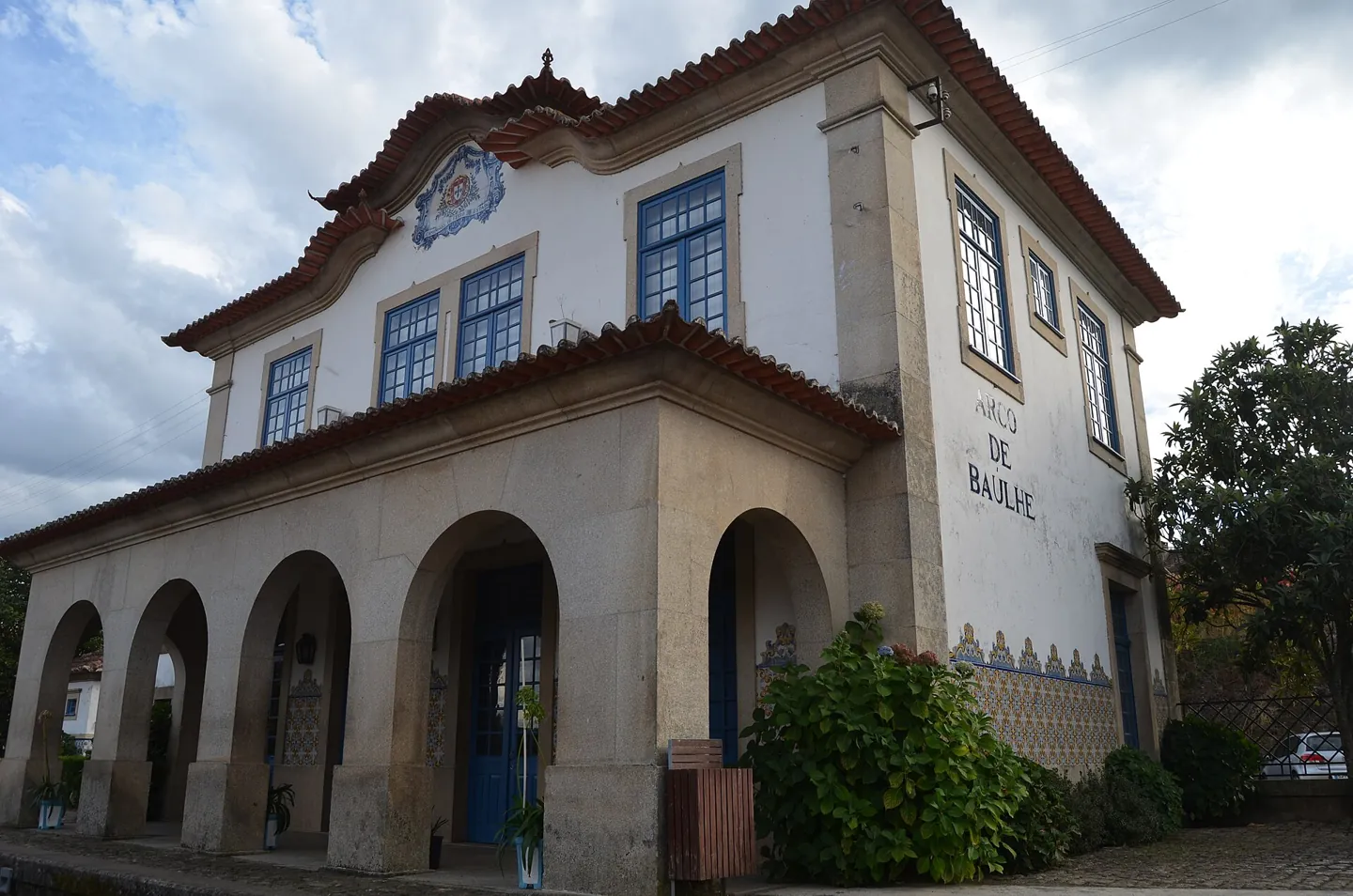
Arco de Baúlhe station building with its arched gallery.
Pedro from Maia (Porto), Portugal
ⓘ

Arco de Baúlhe station building with its arched gallery.

Photography: Pedro from Maia (Porto), Portugal · CC BY 2.0

View source

Date given at source: .

Request removal or correct the photo credit

Arco de Baúlhe station: building and garden.
FF Mira
ⓘ

Arco de Baúlhe station: building and garden.

Photography: FF Mira · CC BY-SA 2.0

View source

Date given at source: .

Request removal or correct the photo credit

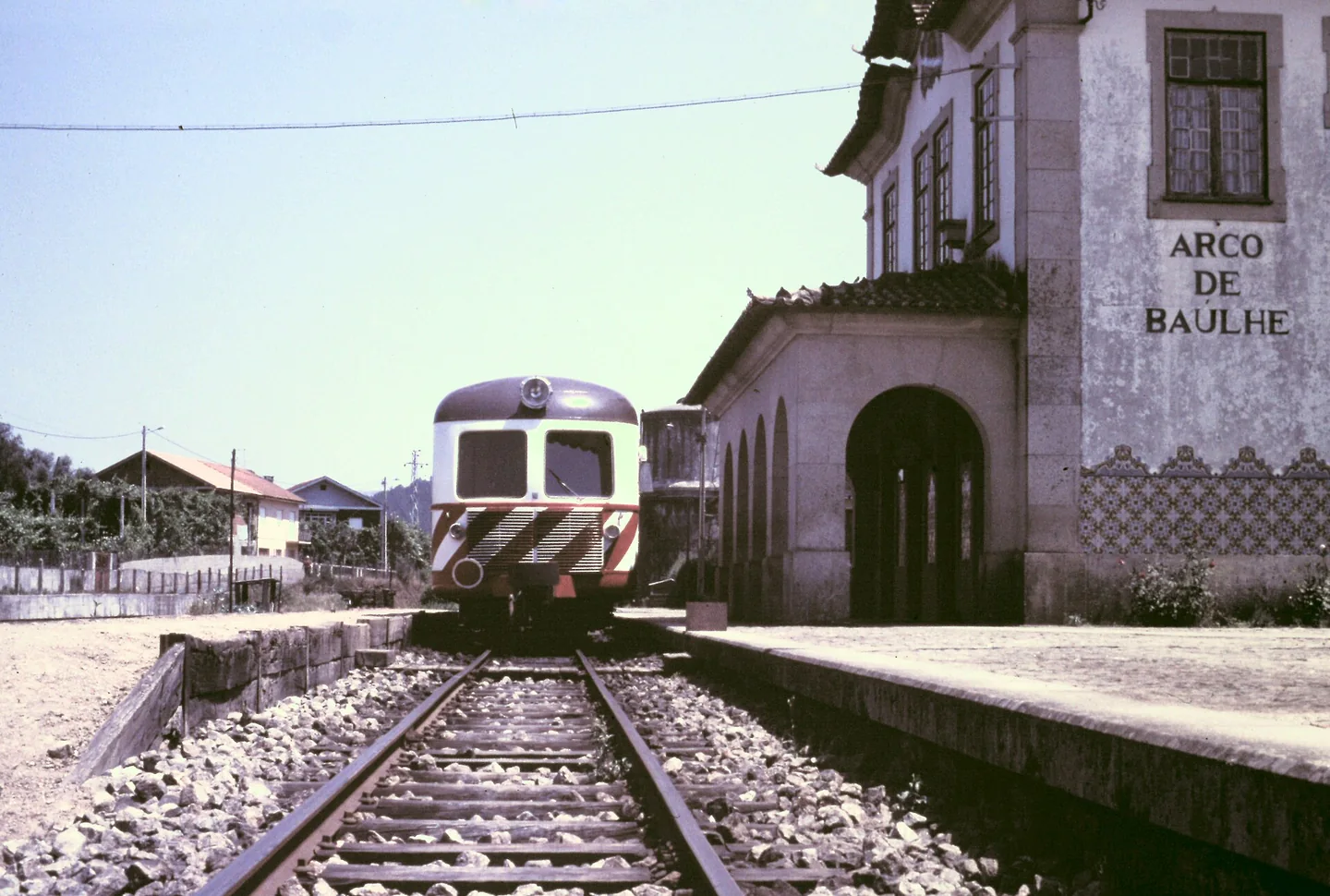
Railway rolling stock on the tracks at the former Arco de Baúlhe station.
Fernando Moital from Évora, Portugal
ⓘ

Railway rolling stock on the tracks at the former Arco de Baúlhe station.

Photography: Fernando Moital from Évora, Portugal · CC BY 2.0

View source

Date given at source: .

Request removal or correct the photo credit

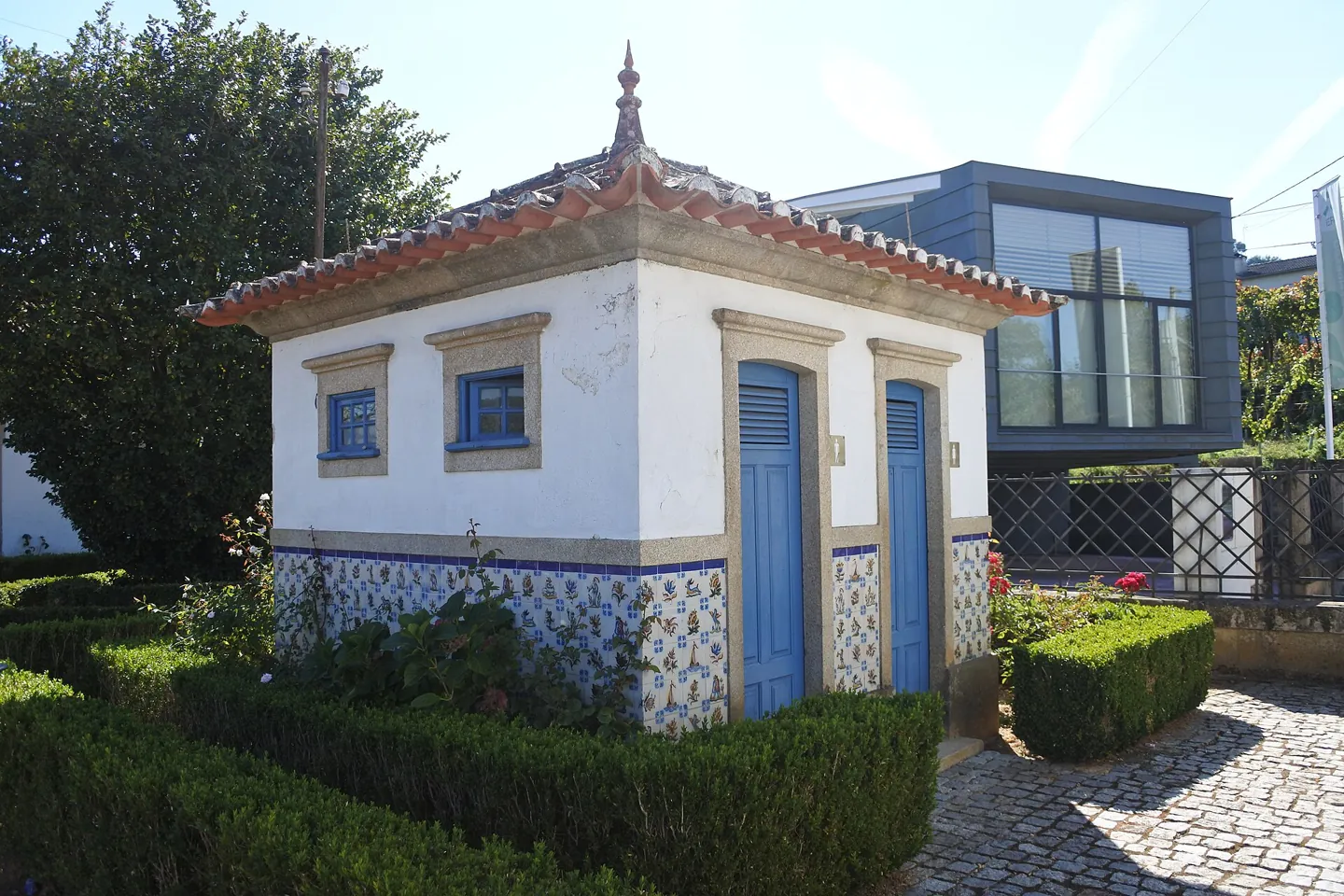
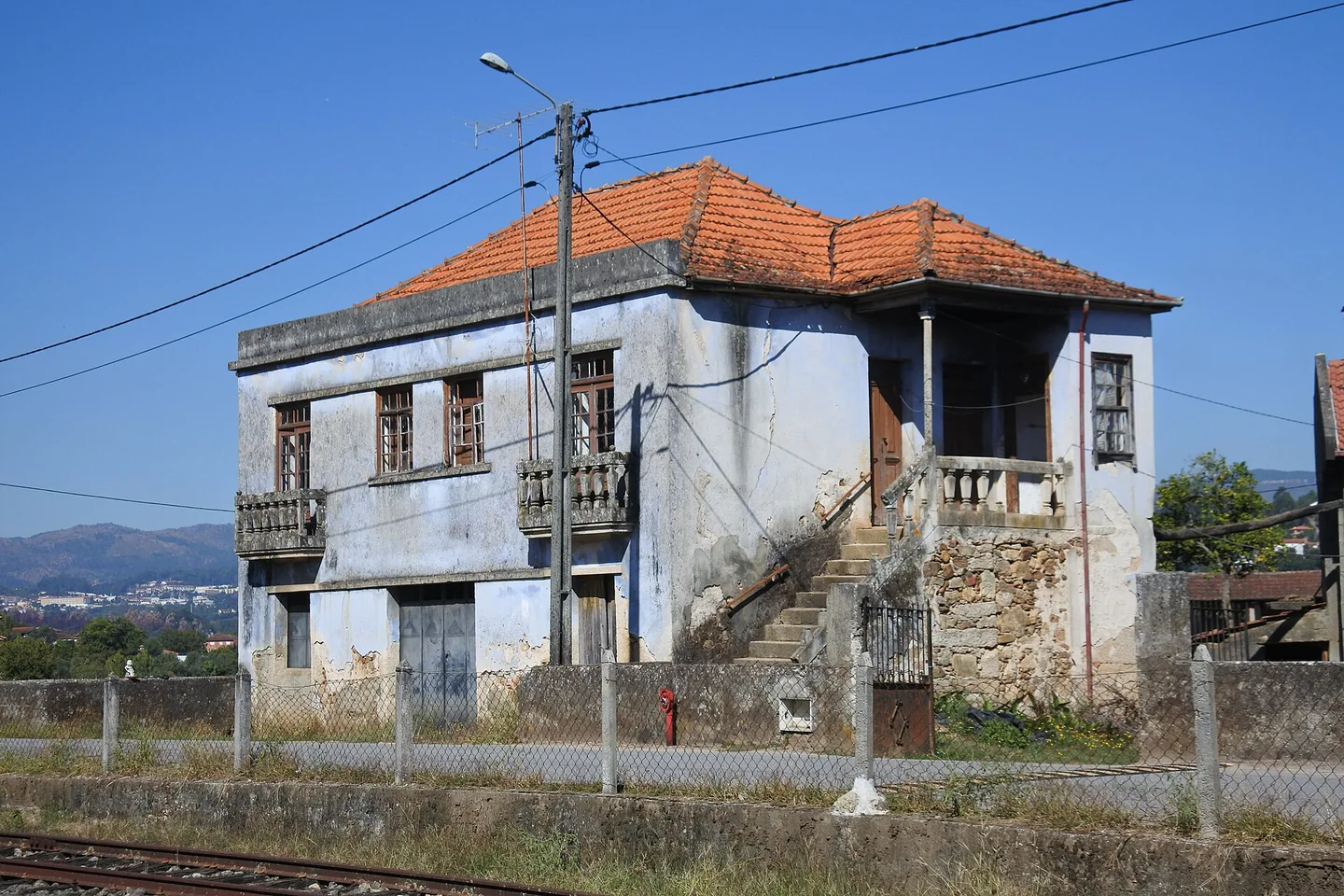
Railway building beside the former Arco de Baúlhe station.
FF Mira
ⓘ

Railway building beside the former Arco de Baúlhe station.

Photography: FF Mira · CC BY-SA 2.0

View source

Date given at source: .

Request removal or correct the photo credit

Vamos experimentar?

  1. Draws three boxes: passengers, goods and museum.
  2. Associates to each box a function described in the stories of this route.
  3. Search in the text which of the working spaces began to receive exhibitions.

A proposal to make with texts, paper and pencils, no movement.

Open a história e os seus recursos →
Sources of this proposal

My findings

An idea, a drawing or a question to go on.
PROPOSTA 2 DE 2 · Travel through time

Try observing

Gondiães and Vilar de Cunhas · memory and landscape

A house with three granaries

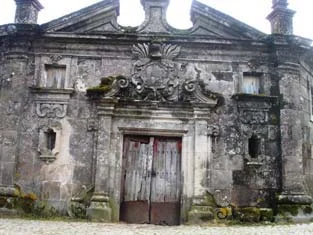
At Casa de Chouzas, three 19th-century granaries stand alongside the manor house highlighted by the municipality. The group connects two functions: living and storing the harvest. Rather than looking only at the main house, it is worth recognising the importance of buildings supporting agriculture. The introduction to Vilar de Cunhas places this heritage in a landscape of plateau and mountain, shaped by farming and pastoralism. House and granaries can be read in that working context, although the source does not detail each property’s production. The house’s dating is less firm: the municipality presents it as perhaps 19th-century, while assigning the granaries to the 19th century. That difference should remain visible. The photograph accompanying the reading shows the portal, not the three granaries. The heritage reference does not confirm access to the group.

Municipal archive photograph: Casa de Chouzas.
Portal da Casa de Chouzas · photo of the municipal inventory; the granaries do not appear in this framework.ⓘ

Vamos experimentar?

  1. Look at the photo of the portal and list only the elements you can see.
  2. Compared to the three granaries mentioned in the text: what depends on the written description?
  3. Imagine a caption that distinguishes the frame of the photograph from the remaining patrimonial set.

An activity to try at your own pace, without collecting specimens.

Open a história e os seus recursos →
Sources of this proposal

My findings

An idea, a drawing or a question to go on.

YOUR LOCAL GUIDE

What would you like to discover?

Take a closer look.